Questões de concursos

Filtrado por:
As alterações serão aplicadas ao filtrar.
Encontradas 21977 questões
Texto associado

TEXT II


A typical situation during a class is when a student asks to leave the room.

In this case, when granting permission, the teacher’s reply should be

😭 Você errou!   Resposta: 😘 Parabéns! Você acertou!

Escolha quais comentários gostaria de ver

Carregando marcador...

COMO A MIA PODE AJUDAR?

🔒 Tire sua dúvidaDisponível nos planos pagos.
🔒 Plano de revisãoUtilize a MIA para gerar um plano de revisão com base no seu desempenho na plataforma.

Compartilhe esta questão

Envie para quem também está estudando.

Texto associado

TEXT II


Based on the Brazilian National Core Curriculum (BNCC), an approach to teaching English as a Lingua Franca should focus on multiliteracies so that students become aware of a variety of language practices and learn how to use them. Choosing this poster would thus be aligned with a multiliteracies approach.

In this case, analyse the statements below.

I. Interpreting this poster depends on world knowledge, image perception and some language proficiency.

II. Advanced students of English can easily understand the information provided in this poster.

III. This poster is an example of gender stereotyping.

Choose the correct answer.

😭 Você errou!   Resposta: 😘 Parabéns! Você acertou!

Escolha quais comentários gostaria de ver

Carregando marcador...

COMO A MIA PODE AJUDAR?

🔒 Tire sua dúvidaDisponível nos planos pagos.
🔒 Plano de revisãoUtilize a MIA para gerar um plano de revisão com base no seu desempenho na plataforma.

Compartilhe esta questão

Envie para quem também está estudando.

Texto associado

TEXT I


Emotions inspire transformation: delving into EFL teachers’ emotions and professional identities

Emotions in education have attracted significant attention over the past few years, particularly in language teaching and learning. Emotions are not just fleeting states but also play a crucial role in classroom dynamics, influencing both student achievements and the quality of teaching. In particular, they are instrumental in influencing teachers’ professional identity, image, affective commitment level, and even classroom performance because the emotional experiences of teachers are deep, complex, and intertwined with their very professional identity. Teaching English as a Foreign Language (EFL) typically intensifies the emotional complexity. Subsequent research has extended beyond the understanding of emotions as solely psychological phenomena, and emotions are now also understood as sociocultural and political constructs. Viewed this way, teaching can be seen as emotional labor: an ongoing demand to demonstrate and regulate emotions in a way that aligns with professional norms but may lead to burnout and disillusionment if no coping mechanisms are provided. The challenges faced by teachers have led to an increased call for support to help them identify, process, and respond to emotions. This notion supports conscious emotional work, and as it is no longer viewed solely as remedial practice, it is a critical first step in developing coherent and resilient professional identities. The relationship between teacher emotions and identity is not a linear one; they are in constant and dynamic interplay with one another. As emotional experiences fluctuate, whether through student interactions, collegial relationships, or institutionalized approaches and policies, the teacher’s capacity to develop in a sense of professional identity also changes.

Adapted from https://www.frontiersin.org

The last sentence of Text I indicates that professional identity can be

😭 Você errou!   Resposta: 😘 Parabéns! Você acertou!

Escolha quais comentários gostaria de ver

Carregando marcador...

COMO A MIA PODE AJUDAR?

🔒 Tire sua dúvidaDisponível nos planos pagos.
🔒 Plano de revisãoUtilize a MIA para gerar um plano de revisão com base no seu desempenho na plataforma.

Compartilhe esta questão

Envie para quem também está estudando.

Texto associado

TEXT I


Emotions inspire transformation: delving into EFL teachers’ emotions and professional identities

Emotions in education have attracted significant attention over the past few years, particularly in language teaching and learning. Emotions are not just fleeting states but also play a crucial role in classroom dynamics, influencing both student achievements and the quality of teaching. In particular, they are instrumental in influencing teachers’ professional identity, image, affective commitment level, and even classroom performance because the emotional experiences of teachers are deep, complex, and intertwined with their very professional identity. Teaching English as a Foreign Language (EFL) typically intensifies the emotional complexity. Subsequent research has extended beyond the understanding of emotions as solely psychological phenomena, and emotions are now also understood as sociocultural and political constructs. Viewed this way, teaching can be seen as emotional labor: an ongoing demand to demonstrate and regulate emotions in a way that aligns with professional norms but may lead to burnout and disillusionment if no coping mechanisms are provided. The challenges faced by teachers have led to an increased call for support to help them identify, process, and respond to emotions. This notion supports conscious emotional work, and as it is no longer viewed solely as remedial practice, it is a critical first step in developing coherent and resilient professional identities. The relationship between teacher emotions and identity is not a linear one; they are in constant and dynamic interplay with one another. As emotional experiences fluctuate, whether through student interactions, collegial relationships, or institutionalized approaches and policies, the teacher’s capacity to develop in a sense of professional identity also changes.

Adapted from https://www.frontiersin.org

The noun phrase “the teacher’s capacity” is an instance of the genitive case. In order to teach how to express possession, the only sentence that the teacher could use as an example is

😭 Você errou!   Resposta: 😘 Parabéns! Você acertou!

Escolha quais comentários gostaria de ver

Carregando marcador...

COMO A MIA PODE AJUDAR?

🔒 Tire sua dúvidaDisponível nos planos pagos.
🔒 Plano de revisãoUtilize a MIA para gerar um plano de revisão com base no seu desempenho na plataforma.

Compartilhe esta questão

Envie para quem também está estudando.

Texto associado

TEXT I


Emotions inspire transformation: delving into EFL teachers’ emotions and professional identities

Emotions in education have attracted significant attention over the past few years, particularly in language teaching and learning. Emotions are not just fleeting states but also play a crucial role in classroom dynamics, influencing both student achievements and the quality of teaching. In particular, they are instrumental in influencing teachers’ professional identity, image, affective commitment level, and even classroom performance because the emotional experiences of teachers are deep, complex, and intertwined with their very professional identity. Teaching English as a Foreign Language (EFL) typically intensifies the emotional complexity. Subsequent research has extended beyond the understanding of emotions as solely psychological phenomena, and emotions are now also understood as sociocultural and political constructs. Viewed this way, teaching can be seen as emotional labor: an ongoing demand to demonstrate and regulate emotions in a way that aligns with professional norms but may lead to burnout and disillusionment if no coping mechanisms are provided. The challenges faced by teachers have led to an increased call for support to help them identify, process, and respond to emotions. This notion supports conscious emotional work, and as it is no longer viewed solely as remedial practice, it is a critical first step in developing coherent and resilient professional identities. The relationship between teacher emotions and identity is not a linear one; they are in constant and dynamic interplay with one another. As emotional experiences fluctuate, whether through student interactions, collegial relationships, or institutionalized approaches and policies, the teacher’s capacity to develop in a sense of professional identity also changes.

Adapted from https://www.frontiersin.org

In writing the clause “if no coping mechanisms are provided”, the author has used the

😭 Você errou!   Resposta: 😘 Parabéns! Você acertou!

Escolha quais comentários gostaria de ver

Carregando marcador...

COMO A MIA PODE AJUDAR?

🔒 Tire sua dúvidaDisponível nos planos pagos.
🔒 Plano de revisãoUtilize a MIA para gerar um plano de revisão com base no seu desempenho na plataforma.

Compartilhe esta questão

Envie para quem também está estudando.

Texto associado

TEXT I


Emotions inspire transformation: delving into EFL teachers’ emotions and professional identities

Emotions in education have attracted significant attention over the past few years, particularly in language teaching and learning. Emotions are not just fleeting states but also play a crucial role in classroom dynamics, influencing both student achievements and the quality of teaching. In particular, they are instrumental in influencing teachers’ professional identity, image, affective commitment level, and even classroom performance because the emotional experiences of teachers are deep, complex, and intertwined with their very professional identity. Teaching English as a Foreign Language (EFL) typically intensifies the emotional complexity. Subsequent research has extended beyond the understanding of emotions as solely psychological phenomena, and emotions are now also understood as sociocultural and political constructs. Viewed this way, teaching can be seen as emotional labor: an ongoing demand to demonstrate and regulate emotions in a way that aligns with professional norms but may lead to burnout and disillusionment if no coping mechanisms are provided. The challenges faced by teachers have led to an increased call for support to help them identify, process, and respond to emotions. This notion supports conscious emotional work, and as it is no longer viewed solely as remedial practice, it is a critical first step in developing coherent and resilient professional identities. The relationship between teacher emotions and identity is not a linear one; they are in constant and dynamic interplay with one another. As emotional experiences fluctuate, whether through student interactions, collegial relationships, or institutionalized approaches and policies, the teacher’s capacity to develop in a sense of professional identity also changes.

Adapted from https://www.frontiersin.org

In an English as a Lingua Franca (ELF) setting, it is important that students learn how new words are created, as this will help them expand their vocabulary and understand how the new word can be used in different contexts. To do so, one possibility is writing the word “interplay” on the blackboard and asking them how it is formed.

They should answer that “interplay” is formed by a(n)

😭 Você errou!   Resposta: 😘 Parabéns! Você acertou!

Escolha quais comentários gostaria de ver

Carregando marcador...

COMO A MIA PODE AJUDAR?

🔒 Tire sua dúvidaDisponível nos planos pagos.
🔒 Plano de revisãoUtilize a MIA para gerar um plano de revisão com base no seu desempenho na plataforma.

Compartilhe esta questão

Envie para quem também está estudando.

Texto associado

TEXT I


Emotions inspire transformation: delving into EFL teachers’ emotions and professional identities

Emotions in education have attracted significant attention over the past few years, particularly in language teaching and learning. Emotions are not just fleeting states but also play a crucial role in classroom dynamics, influencing both student achievements and the quality of teaching. In particular, they are instrumental in influencing teachers’ professional identity, image, affective commitment level, and even classroom performance because the emotional experiences of teachers are deep, complex, and intertwined with their very professional identity. Teaching English as a Foreign Language (EFL) typically intensifies the emotional complexity. Subsequent research has extended beyond the understanding of emotions as solely psychological phenomena, and emotions are now also understood as sociocultural and political constructs. Viewed this way, teaching can be seen as emotional labor: an ongoing demand to demonstrate and regulate emotions in a way that aligns with professional norms but may lead to burnout and disillusionment if no coping mechanisms are provided. The challenges faced by teachers have led to an increased call for support to help them identify, process, and respond to emotions. This notion supports conscious emotional work, and as it is no longer viewed solely as remedial practice, it is a critical first step in developing coherent and resilient professional identities. The relationship between teacher emotions and identity is not a linear one; they are in constant and dynamic interplay with one another. As emotional experiences fluctuate, whether through student interactions, collegial relationships, or institutionalized approaches and policies, the teacher’s capacity to develop in a sense of professional identity also changes.

Adapted from https://www.frontiersin.org

The adverb “even” in “and even classroom performance” implies that something is

😭 Você errou!   Resposta: 😘 Parabéns! Você acertou!

Escolha quais comentários gostaria de ver

Carregando marcador...

COMO A MIA PODE AJUDAR?

🔒 Tire sua dúvidaDisponível nos planos pagos.
🔒 Plano de revisãoUtilize a MIA para gerar um plano de revisão com base no seu desempenho na plataforma.

Compartilhe esta questão

Envie para quem também está estudando.

Texto associado

TEXT I


Emotions inspire transformation: delving into EFL teachers’ emotions and professional identities

Emotions in education have attracted significant attention over the past few years, particularly in language teaching and learning. Emotions are not just fleeting states but also play a crucial role in classroom dynamics, influencing both student achievements and the quality of teaching. In particular, they are instrumental in influencing teachers’ professional identity, image, affective commitment level, and even classroom performance because the emotional experiences of teachers are deep, complex, and intertwined with their very professional identity. Teaching English as a Foreign Language (EFL) typically intensifies the emotional complexity. Subsequent research has extended beyond the understanding of emotions as solely psychological phenomena, and emotions are now also understood as sociocultural and political constructs. Viewed this way, teaching can be seen as emotional labor: an ongoing demand to demonstrate and regulate emotions in a way that aligns with professional norms but may lead to burnout and disillusionment if no coping mechanisms are provided. The challenges faced by teachers have led to an increased call for support to help them identify, process, and respond to emotions. This notion supports conscious emotional work, and as it is no longer viewed solely as remedial practice, it is a critical first step in developing coherent and resilient professional identities. The relationship between teacher emotions and identity is not a linear one; they are in constant and dynamic interplay with one another. As emotional experiences fluctuate, whether through student interactions, collegial relationships, or institutionalized approaches and policies, the teacher’s capacity to develop in a sense of professional identity also changes.

Adapted from https://www.frontiersin.org

According to Text I, if teachers neglect strategies for dealing with stress, they may feel

😭 Você errou!   Resposta: 😘 Parabéns! Você acertou!

Escolha quais comentários gostaria de ver

Carregando marcador...

COMO A MIA PODE AJUDAR?

🔒 Tire sua dúvidaDisponível nos planos pagos.
🔒 Plano de revisãoUtilize a MIA para gerar um plano de revisão com base no seu desempenho na plataforma.

Compartilhe esta questão

Envie para quem também está estudando.

Texto associado

TEXT I


Emotions inspire transformation: delving into EFL teachers’ emotions and professional identities

Emotions in education have attracted significant attention over the past few years, particularly in language teaching and learning. Emotions are not just fleeting states but also play a crucial role in classroom dynamics, influencing both student achievements and the quality of teaching. In particular, they are instrumental in influencing teachers’ professional identity, image, affective commitment level, and even classroom performance because the emotional experiences of teachers are deep, complex, and intertwined with their very professional identity. Teaching English as a Foreign Language (EFL) typically intensifies the emotional complexity. Subsequent research has extended beyond the understanding of emotions as solely psychological phenomena, and emotions are now also understood as sociocultural and political constructs. Viewed this way, teaching can be seen as emotional labor: an ongoing demand to demonstrate and regulate emotions in a way that aligns with professional norms but may lead to burnout and disillusionment if no coping mechanisms are provided. The challenges faced by teachers have led to an increased call for support to help them identify, process, and respond to emotions. This notion supports conscious emotional work, and as it is no longer viewed solely as remedial practice, it is a critical first step in developing coherent and resilient professional identities. The relationship between teacher emotions and identity is not a linear one; they are in constant and dynamic interplay with one another. As emotional experiences fluctuate, whether through student interactions, collegial relationships, or institutionalized approaches and policies, the teacher’s capacity to develop in a sense of professional identity also changes.

Adapted from https://www.frontiersin.org

The sentence “Emotions are not just fleeting states” means that emotions are actually

😭 Você errou!   Resposta: 😘 Parabéns! Você acertou!

Escolha quais comentários gostaria de ver

Carregando marcador...

COMO A MIA PODE AJUDAR?

🔒 Tire sua dúvidaDisponível nos planos pagos.
🔒 Plano de revisãoUtilize a MIA para gerar um plano de revisão com base no seu desempenho na plataforma.

Compartilhe esta questão

Envie para quem também está estudando.

Texto associado

TEXT I


Emotions inspire transformation: delving into EFL teachers’ emotions and professional identities

Emotions in education have attracted significant attention over the past few years, particularly in language teaching and learning. Emotions are not just fleeting states but also play a crucial role in classroom dynamics, influencing both student achievements and the quality of teaching. In particular, they are instrumental in influencing teachers’ professional identity, image, affective commitment level, and even classroom performance because the emotional experiences of teachers are deep, complex, and intertwined with their very professional identity. Teaching English as a Foreign Language (EFL) typically intensifies the emotional complexity. Subsequent research has extended beyond the understanding of emotions as solely psychological phenomena, and emotions are now also understood as sociocultural and political constructs. Viewed this way, teaching can be seen as emotional labor: an ongoing demand to demonstrate and regulate emotions in a way that aligns with professional norms but may lead to burnout and disillusionment if no coping mechanisms are provided. The challenges faced by teachers have led to an increased call for support to help them identify, process, and respond to emotions. This notion supports conscious emotional work, and as it is no longer viewed solely as remedial practice, it is a critical first step in developing coherent and resilient professional identities. The relationship between teacher emotions and identity is not a linear one; they are in constant and dynamic interplay with one another. As emotional experiences fluctuate, whether through student interactions, collegial relationships, or institutionalized approaches and policies, the teacher’s capacity to develop in a sense of professional identity also changes.

Adapted from https://www.frontiersin.org

The verb phrase “delving into” in the subtitle implies that EFL teachers’ emotions and professional identities will be

😭 Você errou!   Resposta: 😘 Parabéns! Você acertou!

Escolha quais comentários gostaria de ver

Carregando marcador...

COMO A MIA PODE AJUDAR?

🔒 Tire sua dúvidaDisponível nos planos pagos.
🔒 Plano de revisãoUtilize a MIA para gerar um plano de revisão com base no seu desempenho na plataforma.

Compartilhe esta questão

Envie para quem também está estudando.

Texto associado

TEXT I


Emotions inspire transformation: delving into EFL teachers’ emotions and professional identities

Emotions in education have attracted significant attention over the past few years, particularly in language teaching and learning. Emotions are not just fleeting states but also play a crucial role in classroom dynamics, influencing both student achievements and the quality of teaching. In particular, they are instrumental in influencing teachers’ professional identity, image, affective commitment level, and even classroom performance because the emotional experiences of teachers are deep, complex, and intertwined with their very professional identity. Teaching English as a Foreign Language (EFL) typically intensifies the emotional complexity. Subsequent research has extended beyond the understanding of emotions as solely psychological phenomena, and emotions are now also understood as sociocultural and political constructs. Viewed this way, teaching can be seen as emotional labor: an ongoing demand to demonstrate and regulate emotions in a way that aligns with professional norms but may lead to burnout and disillusionment if no coping mechanisms are provided. The challenges faced by teachers have led to an increased call for support to help them identify, process, and respond to emotions. This notion supports conscious emotional work, and as it is no longer viewed solely as remedial practice, it is a critical first step in developing coherent and resilient professional identities. The relationship between teacher emotions and identity is not a linear one; they are in constant and dynamic interplay with one another. As emotional experiences fluctuate, whether through student interactions, collegial relationships, or institutionalized approaches and policies, the teacher’s capacity to develop in a sense of professional identity also changes.

Adapted from https://www.frontiersin.org

Based on Text I, mark the statements below as true (T) or false (F).

I. Teachers’ emotional experience is important in building their professional identity.

II. Understanding emotion involves other areas besides psychology.

III. Emotions and identity are independent of each other.

The statements are, respectively,

😭 Você errou!   Resposta: 😘 Parabéns! Você acertou!

Escolha quais comentários gostaria de ver

Carregando marcador...

COMO A MIA PODE AJUDAR?

🔒 Tire sua dúvidaDisponível nos planos pagos.
🔒 Plano de revisãoUtilize a MIA para gerar um plano de revisão com base no seu desempenho na plataforma.

Compartilhe esta questão

Envie para quem também está estudando.

Um composto hidratado de ferro foi submetido à análise química para determinação de sua composição. Os resultados indicaram a presença de 22,4% de ferro, 12,8% de enxofre, 25,6% de oxigênio e 50,4% de água de cristalização.

Dado as massas molares (g/mol): Fe=56; S = 32; O=16; H₂O =18.

Sabendo-se que a massa molar determinada foi de 834,0 gramas, a fórmula química desse composto analisada é representada por

😭 Você errou!   Resposta: 😘 Parabéns! Você acertou!

Escolha quais comentários gostaria de ver

Carregando marcador...

COMO A MIA PODE AJUDAR?

🔒 Tire sua dúvidaDisponível nos planos pagos.
🔒 Plano de revisãoUtilize a MIA para gerar um plano de revisão com base no seu desempenho na plataforma.

Compartilhe esta questão

Envie para quem também está estudando.

O ácido hipofosforoso (H₃PO₂) é utilizado em diversas aplicações que englobam a indústria farmacêutica, revestimento eletrolítico, síntese orgânica, recuperação de metais preciosos e na agricultura como matéria-prima para a síntese de fosfitos.

A equação de neutralização desse ácido com o hidróxido de sódio (NaOH) é representada como

😭 Você errou!   Resposta: 😘 Parabéns! Você acertou!

Escolha quais comentários gostaria de ver

Carregando marcador...

COMO A MIA PODE AJUDAR?

🔒 Tire sua dúvidaDisponível nos planos pagos.
🔒 Plano de revisãoUtilize a MIA para gerar um plano de revisão com base no seu desempenho na plataforma.

Compartilhe esta questão

Envie para quem também está estudando.

O propeno é um gás derivado do petróleo e uma das matérias-primas mais importantes da indústria petroquímica. A entalpia-padrão de reação para a hidrogenação do propeno (C₃H₆(g)) formar propano (C₃H₈(g)) e a entalpia-padrão de reação para a combustão do propano, são respectivamente, -124,0 kJ/mol e -2.220,0 kJ/mol.

Considerando a entalpia-padrão de formação da água (H₂O(l)) a partir de seus elementos no estado padrão, a 298 K, igual a -286,0 kJ/mol.

A entalpia-padrão da combustão do propeno, em kJ/mol, é de

😭 Você errou!   Resposta: 😘 Parabéns! Você acertou!

Escolha quais comentários gostaria de ver

Carregando marcador...

COMO A MIA PODE AJUDAR?

🔒 Tire sua dúvidaDisponível nos planos pagos.
🔒 Plano de revisãoUtilize a MIA para gerar um plano de revisão com base no seu desempenho na plataforma.

Compartilhe esta questão

Envie para quem também está estudando.

A energia nuclear é obtida a partir de reações que ocorrem no núcleo dos átomos, como a fissão de elementos pesados, a exemplo do urânio-235. Esse processo libera grande quantidade de energia, utilizada em diversas aplicações, incluindo a geração de eletricidade.

Com relação aos processos envolvidos na geração de energia nuclear, analise as afirmativas a seguir.

I. A fissão nuclear corresponde à junção de núcleos atômicos, com liberação de energia superior à obtida na fusão nuclear.

II. Uma das vantagens do uso da energia nuclear para a produção de eletricidade é a alta produtividade e a capacidade de operação contínua, sem emissão direta de poluentes atmosféricos. Entre as desvantagens, destacam-se a geração de resíduos radioativos e o risco de acidentes que podem causar explosões e vazamentos de radiação.

III. A bomba atômica é um exemplo de fusão nuclear, enquanto a bomba de hidrogênio é um exemplo de fissão nuclear.

Está correto o que se afirma em

😭 Você errou!   Resposta: 😘 Parabéns! Você acertou!

Escolha quais comentários gostaria de ver

Carregando marcador...

COMO A MIA PODE AJUDAR?

🔒 Tire sua dúvidaDisponível nos planos pagos.
🔒 Plano de revisãoUtilize a MIA para gerar um plano de revisão com base no seu desempenho na plataforma.

Compartilhe esta questão

Envie para quem também está estudando.

Várias indústrias instaladas no Brasil utilizam combustíveis em suas caldeiras que geram grande quantidade de poluentes atmosféricos. Entre eles os materiais particulados, gases e vapores. Os equipamentos e processos utilizados necessitam de materiais e reagentes que reajam química e fisicamente de forma eficiente.

O equipamento utilizado para controlar gases e vapores é o

😭 Você errou!   Resposta: 😘 Parabéns! Você acertou!

Escolha quais comentários gostaria de ver

Carregando marcador...

COMO A MIA PODE AJUDAR?

🔒 Tire sua dúvidaDisponível nos planos pagos.
🔒 Plano de revisãoUtilize a MIA para gerar um plano de revisão com base no seu desempenho na plataforma.

Compartilhe esta questão

Envie para quem também está estudando.

A nicotina é um alcaloide presente em espécies vegetais, como o tabaco. Ela pode ser extraída por solvente orgânico em meio fortemente alcalino, reagindo com o ácido pícrico (2,4,6-trinitrofenol). Quando ambos são misturados em meio apropriado, ocorre uma reação ácido-base de Brønsted-Lowry, formando o dipicrato de nicotina (DN), um sal insolúvel e estável.

Após a síntese do dipicrato de nicotina, o produto é submetido à purificação por recristalização.
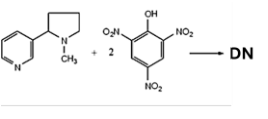
O solvente clássico e mais adequado para a recristalização do dipicrato de nicotina (DN) é

😭 Você errou!   Resposta: 😘 Parabéns! Você acertou!

Escolha quais comentários gostaria de ver

Carregando marcador...

COMO A MIA PODE AJUDAR?

🔒 Tire sua dúvidaDisponível nos planos pagos.
🔒 Plano de revisãoUtilize a MIA para gerar um plano de revisão com base no seu desempenho na plataforma.

Compartilhe esta questão

Envie para quem também está estudando.

O óleo de citronela é uma mistura de substâncias químicas extraídas de partes da planta Cymbopogon. Entre seus componentes está o citronelal, um composto orgânico responsável por parte do aroma característico desse óleo.

A estrutura molecular do citronelal é apresentada na figura a seguir.
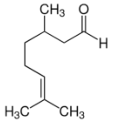
Considerando a estrutura molecular apresentada, a nomenclatura do citronelal segundo as regras da IUPAC é

😭 Você errou!   Resposta: 😘 Parabéns! Você acertou!

Escolha quais comentários gostaria de ver

Carregando marcador...

COMO A MIA PODE AJUDAR?

🔒 Tire sua dúvidaDisponível nos planos pagos.
🔒 Plano de revisãoUtilize a MIA para gerar um plano de revisão com base no seu desempenho na plataforma.

Compartilhe esta questão

Envie para quem também está estudando.

O tratamento biológico de efluentes é uma etapa fundamental dos sistemas de tratamento de águas residuais, pois utiliza microrganismos para remover matéria orgânica e outros poluentes.

Considerando os processos anaeróbios de tratamento, analise as afirmativas a seguir.

I. Algumas vantagens da digestão anaeróbia em comparação aos processos aeróbios são a dispensa da etapa de aeração, o menor consumo de energia, a menor demanda de nutrientes em função da reduzida produção de biomassa e a geração de gás combustível com elevado poder calorífico.

II. A digestão anaeróbia é um processo bioquímico complexo, composto por várias reações sequenciais, cada uma associada a uma população bacteriana específica. Esse processo promove a estabilização da matéria orgânica pela ação de microrganismos anaeróbios, convertendo-a principalmente em CO₂ e compostos inorgânicos.

III. A digestão anaeróbia é um processo bioquímico complexo, composto por várias reações sequenciais, cada uma associada a uma população bacteriana específica. Esse processo promove a estabilização da matéria orgânica pela ação de microrganismos anaeróbios, convertendo-a principalmente em metano e compostos inorgânicos.

Está correto o que se afirma em

😭 Você errou!   Resposta: 😘 Parabéns! Você acertou!

Escolha quais comentários gostaria de ver

Carregando marcador...

COMO A MIA PODE AJUDAR?

🔒 Tire sua dúvidaDisponível nos planos pagos.
🔒 Plano de revisãoUtilize a MIA para gerar um plano de revisão com base no seu desempenho na plataforma.

Compartilhe esta questão

Envie para quem também está estudando.

O iodo-131 é um radioisótopo utilizado em tratamentos médicos, especialmente em doenças da tireoide. Sua atividade radioativa diminui com o tempo devido ao decaimento nuclear.

Sabendo que o iodo-131 emite radiação β e que, após 16 dias, sua atividade radioativa é reduzida em 75% do valor inicial, determine o tempo de meia-vida desse radioisótopo.

O tempo de meia-vida do iodo-131 é de

😭 Você errou!   Resposta: 😘 Parabéns! Você acertou!

Escolha quais comentários gostaria de ver

Carregando marcador...

COMO A MIA PODE AJUDAR?

🔒 Tire sua dúvidaDisponível nos planos pagos.
🔒 Plano de revisãoUtilize a MIA para gerar um plano de revisão com base no seu desempenho na plataforma.

Compartilhe esta questão

Envie para quem também está estudando.