Questões de concursos

Filtrado por:
As alterações serão aplicadas ao filtrar.
Encontradas 3710 questões
Texto associado

The archetype of the classic witch is a cornerstone of global folklore and fiction, often depicted as a formidable and sinister antagonist. These figures are deeply embedded in collective storytelling, usually characterized by their malevolent intentions towards protagonists, especially innocent children or virtuous heroes. Their narrative role is fundamentally to embody the forces of darkness, chaos, or forbidden knowledge, creating a clear moral contrast and a formidable obstacle for the main characters to overcome. From European fairy tales to modern pop culture, the classic witch serves as a powerful symbol of fear and the supernatural.
Physically, the traditional witch is frequently described as an old, haggard woman with exaggeratedly ugly features, which visually symbolizes her inner corruption and alienation from societal norms. Common traits include a long, hooked nose, warts, disheveled gray hair, and crooked fingers. She is typically clothed in dark, ragged robes and a pointed, wide-brimmed hat, an image popularized and solidified by Western media. This distinct and fearsome appearance is designed to evoke immediate unease and signal her dangerous nature to the audience.
The classic witch's power is intrinsically linked to specific magical tools and practices. The bubbling cauldron is her quintessential instrument, used for brewing potent potions, casting spells, and concocting mysterious elixirs. Her magic often involves ancient books of spells, enchanted mirrors that show more than mere reflections, and the command over supernatural familiars like black cats, crows, or toads. These elements are not just props; they are extensions of her will and the sources of her power, which she uses to curse, transform, or deceive those who cross her path.
This archetype finds vivid expression in some of the most famous villains of literature and film. The Wicked Witch of the West from The Wizard of Oz menaces Dorothy with hercommand over flying monkeys and her thirst for revenge. The Evil Queen from Snow White, obsessed with being the "fairest of them all," uses a poisoned apple in her deadly scheme. Similarly, Maleficent from Sleeping Beauty is a figure of pure vengeance, cursing an infant princess to a sleep-like death. Beyond Anglo-American tales, other cultures have their own versions, such as Brazil's Cuca, a child-eating alligator-witch from SÌtio do Picapau Amarelo.
However, the portrayal of the witch is not monolithic and has evolved to include more nuanced or comedic figures. In the Mexican sitcom El Chavo del Ocho, DoÒa Clotilde, nicknamed "La Bruja del 71," is a neighborhood eccentric whose witch persona is more a source of gossip and lighthearted fear than genuine evil. Furthermore, modern narratives like the film Hocus Pocus present the Sanderson sisters as a blend of the classic tropes—complete with spell books and a thirst for youth—but with a comedic and less terrifying demeanor, showcasing the adaptability and enduring fascination with this iconic character type.

In the text, the word "storytelling" is used. From a morphological perspective, what process formed this word?

😭 Você errou!   Resposta: 😘 Parabéns! Você acertou!

Escolha quais comentários gostaria de ver

Carregando comentários dos alunos...
Carregando marcador...

MIA

Entenda a questão e transforme a dificuldade em um próximo passo de estudo.
Como a MIA pode ajudar?

🔒 Tire sua dúvidaDisponível nos planos pagos.
🔒 Plano de revisãoDisponível nos planos pagos.
Texto associado

The archetype of the classic witch is a cornerstone of global folklore and fiction, often depicted as a formidable and sinister antagonist. These figures are deeply embedded in collective storytelling, usually characterized by their malevolent intentions towards protagonists, especially innocent children or virtuous heroes. Their narrative role is fundamentally to embody the forces of darkness, chaos, or forbidden knowledge, creating a clear moral contrast and a formidable obstacle for the main characters to overcome. From European fairy tales to modern pop culture, the classic witch serves as a powerful symbol of fear and the supernatural.
Physically, the traditional witch is frequently described as an old, haggard woman with exaggeratedly ugly features, which visually symbolizes her inner corruption and alienation from societal norms. Common traits include a long, hooked nose, warts, disheveled gray hair, and crooked fingers. She is typically clothed in dark, ragged robes and a pointed, wide-brimmed hat, an image popularized and solidified by Western media. This distinct and fearsome appearance is designed to evoke immediate unease and signal her dangerous nature to the audience.
The classic witch's power is intrinsically linked to specific magical tools and practices. The bubbling cauldron is her quintessential instrument, used for brewing potent potions, casting spells, and concocting mysterious elixirs. Her magic often involves ancient books of spells, enchanted mirrors that show more than mere reflections, and the command over supernatural familiars like black cats, crows, or toads. These elements are not just props; they are extensions of her will and the sources of her power, which she uses to curse, transform, or deceive those who cross her path.
This archetype finds vivid expression in some of the most famous villains of literature and film. The Wicked Witch of the West from The Wizard of Oz menaces Dorothy with hercommand over flying monkeys and her thirst for revenge. The Evil Queen from Snow White, obsessed with being the "fairest of them all," uses a poisoned apple in her deadly scheme. Similarly, Maleficent from Sleeping Beauty is a figure of pure vengeance, cursing an infant princess to a sleep-like death. Beyond Anglo-American tales, other cultures have their own versions, such as Brazil's Cuca, a child-eating alligator-witch from SÌtio do Picapau Amarelo.
However, the portrayal of the witch is not monolithic and has evolved to include more nuanced or comedic figures. In the Mexican sitcom El Chavo del Ocho, DoÒa Clotilde, nicknamed "La Bruja del 71," is a neighborhood eccentric whose witch persona is more a source of gossip and lighthearted fear than genuine evil. Furthermore, modern narratives like the film Hocus Pocus present the Sanderson sisters as a blend of the classic tropes—complete with spell books and a thirst for youth—but with a comedic and less terrifying demeanor, showcasing the adaptability and enduring fascination with this iconic character type.

Considering the last paragraph, what is the most accurate critical inference about the evolution of the witch figure in modern narratives?

😭 Você errou!   Resposta: 😘 Parabéns! Você acertou!

Escolha quais comentários gostaria de ver

Carregando comentários dos alunos...
Carregando marcador...

MIA

Entenda a questão e transforme a dificuldade em um próximo passo de estudo.

Como a MIA pode ajudar?

🔒 Tire sua dúvidaDisponível nos planos pagos.
🔒 Plano de revisãoDisponível nos planos pagos.
Texto associado

The archetype of the classic witch is a cornerstone of global folklore and fiction, often depicted as a formidable and sinister antagonist. These figures are deeply embedded in collective storytelling, usually characterized by their malevolent intentions towards protagonists, especially innocent children or virtuous heroes. Their narrative role is fundamentally to embody the forces of darkness, chaos, or forbidden knowledge, creating a clear moral contrast and a formidable obstacle for the main characters to overcome. From European fairy tales to modern pop culture, the classic witch serves as a powerful symbol of fear and the supernatural.
Physically, the traditional witch is frequently described as an old, haggard woman with exaggeratedly ugly features, which visually symbolizes her inner corruption and alienation from societal norms. Common traits include a long, hooked nose, warts, disheveled gray hair, and crooked fingers. She is typically clothed in dark, ragged robes and a pointed, wide-brimmed hat, an image popularized and solidified by Western media. This distinct and fearsome appearance is designed to evoke immediate unease and signal her dangerous nature to the audience.
The classic witch's power is intrinsically linked to specific magical tools and practices. The bubbling cauldron is her quintessential instrument, used for brewing potent potions, casting spells, and concocting mysterious elixirs. Her magic often involves ancient books of spells, enchanted mirrors that show more than mere reflections, and the command over supernatural familiars like black cats, crows, or toads. These elements are not just props; they are extensions of her will and the sources of her power, which she uses to curse, transform, or deceive those who cross her path.
This archetype finds vivid expression in some of the most famous villains of literature and film. The Wicked Witch of the West from The Wizard of Oz menaces Dorothy with hercommand over flying monkeys and her thirst for revenge. The Evil Queen from Snow White, obsessed with being the "fairest of them all," uses a poisoned apple in her deadly scheme. Similarly, Maleficent from Sleeping Beauty is a figure of pure vengeance, cursing an infant princess to a sleep-like death. Beyond Anglo-American tales, other cultures have their own versions, such as Brazil's Cuca, a child-eating alligator-witch from SÌtio do Picapau Amarelo.
However, the portrayal of the witch is not monolithic and has evolved to include more nuanced or comedic figures. In the Mexican sitcom El Chavo del Ocho, DoÒa Clotilde, nicknamed "La Bruja del 71," is a neighborhood eccentric whose witch persona is more a source of gossip and lighthearted fear than genuine evil. Furthermore, modern narratives like the film Hocus Pocus present the Sanderson sisters as a blend of the classic tropes—complete with spell books and a thirst for youth—but with a comedic and less terrifying demeanor, showcasing the adaptability and enduring fascination with this iconic character type.

According to the text, the classic witch, as an archetype in stories, primarily functions as:

😭 Você errou!   Resposta: 😘 Parabéns! Você acertou!

Escolha quais comentários gostaria de ver

Carregando comentários dos alunos...
Carregando marcador...

MIA

Entenda a questão e transforme a dificuldade em um próximo passo de estudo.

Como a MIA pode ajudar?

🔒 Tire sua dúvidaDisponível nos planos pagos.
🔒 Plano de revisãoDisponível nos planos pagos.
Texto associado

The archetype of the classic witch is a cornerstone of global folklore and fiction, often depicted as a formidable and sinister antagonist. These figures are deeply embedded in collective storytelling, usually characterized by their malevolent intentions towards protagonists, especially innocent children or virtuous heroes. Their narrative role is fundamentally to embody the forces of darkness, chaos, or forbidden knowledge, creating a clear moral contrast and a formidable obstacle for the main characters to overcome. From European fairy tales to modern pop culture, the classic witch serves as a powerful symbol of fear and the supernatural.
Physically, the traditional witch is frequently described as an old, haggard woman with exaggeratedly ugly features, which visually symbolizes her inner corruption and alienation from societal norms. Common traits include a long, hooked nose, warts, disheveled gray hair, and crooked fingers. She is typically clothed in dark, ragged robes and a pointed, wide-brimmed hat, an image popularized and solidified by Western media. This distinct and fearsome appearance is designed to evoke immediate unease and signal her dangerous nature to the audience.
The classic witch's power is intrinsically linked to specific magical tools and practices. The bubbling cauldron is her quintessential instrument, used for brewing potent potions, casting spells, and concocting mysterious elixirs. Her magic often involves ancient books of spells, enchanted mirrors that show more than mere reflections, and the command over supernatural familiars like black cats, crows, or toads. These elements are not just props; they are extensions of her will and the sources of her power, which she uses to curse, transform, or deceive those who cross her path.
This archetype finds vivid expression in some of the most famous villains of literature and film. The Wicked Witch of the West from The Wizard of Oz menaces Dorothy with hercommand over flying monkeys and her thirst for revenge. The Evil Queen from Snow White, obsessed with being the "fairest of them all," uses a poisoned apple in her deadly scheme. Similarly, Maleficent from Sleeping Beauty is a figure of pure vengeance, cursing an infant princess to a sleep-like death. Beyond Anglo-American tales, other cultures have their own versions, such as Brazil's Cuca, a child-eating alligator-witch from SÌtio do Picapau Amarelo.
However, the portrayal of the witch is not monolithic and has evolved to include more nuanced or comedic figures. In the Mexican sitcom El Chavo del Ocho, DoÒa Clotilde, nicknamed "La Bruja del 71," is a neighborhood eccentric whose witch persona is more a source of gossip and lighthearted fear than genuine evil. Furthermore, modern narratives like the film Hocus Pocus present the Sanderson sisters as a blend of the classic tropes—complete with spell books and a thirst for youth—but with a comedic and less terrifying demeanor, showcasing the adaptability and enduring fascination with this iconic character type.

The text is structured to guide the reader from a general definition of an archetype to specific examples and, finally, to a counterpoint regarding modern adaptations. Based on the reading of the last paragraph, specifically regarding the characters "Doña Clotilde" and the "Sanderson sisters," it is correct to infer that the author’s main argument concerning the evolution of the witch figure is that:

😭 Você errou!   Resposta: 😘 Parabéns! Você acertou!

Escolha quais comentários gostaria de ver

Carregando comentários dos alunos...
Carregando marcador...

MIA

Entenda a questão e transforme a dificuldade em um próximo passo de estudo.

Como a MIA pode ajudar?

🔒 Tire sua dúvidaDisponível nos planos pagos.
🔒 Plano de revisãoDisponível nos planos pagos.
Texto associado

The archetype of the classic witch is a cornerstone of global folklore and fiction, often depicted as a formidable and sinister antagonist. These figures are deeply embedded in collective storytelling, usually characterized by their malevolent intentions towards protagonists, especially innocent children or virtuous heroes. Their narrative role is fundamentally to embody the forces of darkness, chaos, or forbidden knowledge, creating a clear moral contrast and a formidable obstacle for the main characters to overcome. From European fairy tales to modern pop culture, the classic witch serves as a powerful symbol of fear and the supernatural.
Physically, the traditional witch is frequently described as an old, haggard woman with exaggeratedly ugly features, which visually symbolizes her inner corruption and alienation from societal norms. Common traits include a long, hooked nose, warts, disheveled gray hair, and crooked fingers. She is typically clothed in dark, ragged robes and a pointed, wide-brimmed hat, an image popularized and solidified by Western media. This distinct and fearsome appearance is designed to evoke immediate unease and signal her dangerous nature to the audience.
The classic witch's power is intrinsically linked to specific magical tools and practices. The bubbling cauldron is her quintessential instrument, used for brewing potent potions, casting spells, and concocting mysterious elixirs. Her magic often involves ancient books of spells, enchanted mirrors that show more than mere reflections, and the command over supernatural familiars like black cats, crows, or toads. These elements are not just props; they are extensions of her will and the sources of her power, which she uses to curse, transform, or deceive those who cross her path.
This archetype finds vivid expression in some of the most famous villains of literature and film. The Wicked Witch of the West from The Wizard of Oz menaces Dorothy with hercommand over flying monkeys and her thirst for revenge. The Evil Queen from Snow White, obsessed with being the "fairest of them all," uses a poisoned apple in her deadly scheme. Similarly, Maleficent from Sleeping Beauty is a figure of pure vengeance, cursing an infant princess to a sleep-like death. Beyond Anglo-American tales, other cultures have their own versions, such as Brazil's Cuca, a child-eating alligator-witch from SÌtio do Picapau Amarelo.
However, the portrayal of the witch is not monolithic and has evolved to include more nuanced or comedic figures. In the Mexican sitcom El Chavo del Ocho, DoÒa Clotilde, nicknamed "La Bruja del 71," is a neighborhood eccentric whose witch persona is more a source of gossip and lighthearted fear than genuine evil. Furthermore, modern narratives like the film Hocus Pocus present the Sanderson sisters as a blend of the classic tropes—complete with spell books and a thirst for youth—but with a comedic and less terrifying demeanor, showcasing the adaptability and enduring fascination with this iconic character type.

In the third paragraph, the author employs specific lexical choices to establish the relationship between the witch and her tools. When describing the bubbling cauldron as the witch's "quintessential instrument," the author uses this adjective to discursively emphasize that the cauldron is:

😭 Você errou!   Resposta: 😘 Parabéns! Você acertou!

Escolha quais comentários gostaria de ver

Carregando comentários dos alunos...
Carregando marcador...

MIA

Entenda a questão e transforme a dificuldade em um próximo passo de estudo.

Como a MIA pode ajudar?

🔒 Tire sua dúvidaDisponível nos planos pagos.
🔒 Plano de revisãoDisponível nos planos pagos.

Assinale a alternativa cujos elementos preenchem corretamente as lacunas abaixo, em relação à teoria do desenvolvimento cognitivo de Jean Piaget:

“O desenvolvimento da linguagem pela criança ocorre como _______ do desenvolvimento cognitivo, surgindo gradualmente a partir das ações _______ e das interações com o meio, evoluindo conforme a criança constrói estruturas mentais mais _______ que lhe permitem usar símbolos.”

😭 Você errou!   Resposta: 😘 Parabéns! Você acertou!

Escolha quais comentários gostaria de ver

Carregando comentários dos alunos...
Carregando marcador...

MIA

Entenda a questão e transforme a dificuldade em um próximo passo de estudo.

Como a MIA pode ajudar?

🔒 Tire sua dúvidaDisponível nos planos pagos.
🔒 Plano de revisãoDisponível nos planos pagos.

Assinale a alternativa que completa corretamente o trecho abaixo:

“Como manifestação presente à experiência vital, a curiosidade humana vem sendo histórica e socialmente construída e reconstruída. Precisamente porque a promoção da ingenuidade para a criticidade não se dá automaticamente, umas das tarefas precípuas da prática educativo-progressista é exatamente o desenvolvimento da curiosidade _______.” (FREIRE, Paulo. Pedagogia da autonomia.)

😭 Você errou!   Resposta: 😘 Parabéns! Você acertou!

Escolha quais comentários gostaria de ver

Carregando comentários dos alunos...
Carregando marcador...

MIA

Entenda a questão e transforme a dificuldade em um próximo passo de estudo.

Como a MIA pode ajudar?

🔒 Tire sua dúvidaDisponível nos planos pagos.
🔒 Plano de revisãoDisponível nos planos pagos.

Teóricos da educação contemporânea fundamentam suas críticas em oposição à educação “bancária”, sendo esta caracterizada como:

😭 Você errou!   Resposta: 😘 Parabéns! Você acertou!

Escolha quais comentários gostaria de ver

Carregando comentários dos alunos...
Carregando marcador...

MIA

Entenda a questão e transforme a dificuldade em um próximo passo de estudo.

Como a MIA pode ajudar?

🔒 Tire sua dúvidaDisponível nos planos pagos.
🔒 Plano de revisãoDisponível nos planos pagos.
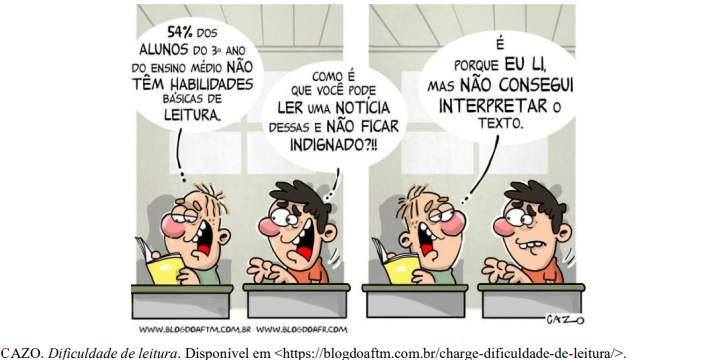
Texto associado

A charge acima retrata criticamente um fenômeno na educação, relacionado ao desenvolvimento da linguagem, que é o(a):

😭 Você errou!   Resposta: 😘 Parabéns! Você acertou!

Escolha quais comentários gostaria de ver

Carregando comentários dos alunos...
Carregando marcador...

MIA

Entenda a questão e transforme a dificuldade em um próximo passo de estudo.

Como a MIA pode ajudar?

🔒 Tire sua dúvidaDisponível nos planos pagos.
🔒 Plano de revisãoDisponível nos planos pagos.

Assinale a alternativa em que ambos os elementos caracterizam o uso das tecnologias de informação e comunicação (TICs) na área da educação.

😭 Você errou!   Resposta: 😘 Parabéns! Você acertou!

Escolha quais comentários gostaria de ver

Carregando comentários dos alunos...
Carregando marcador...

MIA

Entenda a questão e transforme a dificuldade em um próximo passo de estudo.

Como a MIA pode ajudar?

🔒 Tire sua dúvidaDisponível nos planos pagos.
🔒 Plano de revisãoDisponível nos planos pagos.

De acordo com a Lei nº 13.146/2015, a quem incumbe assegurar, criar, desenvolver, implementar, incentivar, acompanhar e avaliar a oferta de educação bilíngue, em Libras como primeira língua e na modalidade escrita da língua portuguesa como segunda língua, em escolas e classes bilíngues e em escolas inclusivas?

😭 Você errou!   Resposta: 😘 Parabéns! Você acertou!

Escolha quais comentários gostaria de ver

Carregando comentários dos alunos...
Carregando marcador...

MIA

Entenda a questão e transforme a dificuldade em um próximo passo de estudo.

Como a MIA pode ajudar?

🔒 Tire sua dúvidaDisponível nos planos pagos.
🔒 Plano de revisãoDisponível nos planos pagos.

De acordo com a Resolução nº 5, de 17 de dezembro de 2009, complete corretamente as lacunas:

As propostas pedagógicas da Educação Infantil deverão considerar que a criança, _____________, é sujeito histórico e de direitos que, nas interações, relações e práticas cotidianas que vivencia, constrói sua identidade pessoal e coletiva, brinca, imagina, fantasia, deseja, aprende, observa, experimenta, narra, questiona e ______________ e a sociedade, produzindo cultura .

😭 Você errou!   Resposta: 😘 Parabéns! Você acertou!

Escolha quais comentários gostaria de ver

Carregando comentários dos alunos...
Carregando marcador...

MIA

Entenda a questão e transforme a dificuldade em um próximo passo de estudo.

Como a MIA pode ajudar?

🔒 Tire sua dúvidaDisponível nos planos pagos.
🔒 Plano de revisãoDisponível nos planos pagos.

De acordo com a Constituição Federal, os recursos públicos poderão ser destinados a escolas comunitárias, confessionais ou filantrópicas, desde que:

😭 Você errou!   Resposta: 😘 Parabéns! Você acertou!

Escolha quais comentários gostaria de ver

Carregando comentários dos alunos...
Carregando marcador...

MIA

Entenda a questão e transforme a dificuldade em um próximo passo de estudo.

Como a MIA pode ajudar?

🔒 Tire sua dúvidaDisponível nos planos pagos.
🔒 Plano de revisãoDisponível nos planos pagos.

De acordo com a Lei nº 9.394/1996 (LDB), o ensino será ministrado com base em alguns princípios. Assinale a alternativa que corresponde a dois desses princípios:

😭 Você errou!   Resposta: 😘 Parabéns! Você acertou!

Escolha quais comentários gostaria de ver

Carregando comentários dos alunos...
Carregando marcador...

MIA

Entenda a questão e transforme a dificuldade em um próximo passo de estudo.

Como a MIA pode ajudar?

🔒 Tire sua dúvidaDisponível nos planos pagos.
🔒 Plano de revisãoDisponível nos planos pagos.

De acordo com o Estatuto da Criança e do Adolescente (Lei nº 8.069/1990), constitui atribuição de um órgão específico encaminhar ao Ministério Público notícia de fato que constitua infração administrativa ou penal contra os direitos da criança ou adolescente.
Nesse contexto, essa atribuição é do:

😭 Você errou!   Resposta: 😘 Parabéns! Você acertou!

Escolha quais comentários gostaria de ver

Carregando comentários dos alunos...
Carregando marcador...

MIA

Entenda a questão e transforme a dificuldade em um próximo passo de estudo.

Como a MIA pode ajudar?

🔒 Tire sua dúvidaDisponível nos planos pagos.
🔒 Plano de revisãoDisponível nos planos pagos.

Como é denominado o processo de "baixar" arquivos de um computador remoto para o seu computador pessoal através da internet:

😭 Você errou!   Resposta: 😘 Parabéns! Você acertou!

Escolha quais comentários gostaria de ver

Carregando comentários dos alunos...
Carregando marcador...

MIA

Entenda a questão e transforme a dificuldade em um próximo passo de estudo.

Como a MIA pode ajudar?

🔒 Tire sua dúvidaDisponível nos planos pagos.
🔒 Plano de revisãoDisponível nos planos pagos.

O Excel utiliza operadores para realizar cálculos dentro de fórmulas. De acordo com as regras de precedência adotadas pelo programa, a ordem padrão de processamento é: Parênteses, Expoentes, Multiplicação e Divisão, e Adição e Subtração. Considerando essas informações, assinale a alternativa que apresenta um operador utilizado especificamente para adição em uma fórmula.

😭 Você errou!   Resposta: 😘 Parabéns! Você acertou!

Escolha quais comentários gostaria de ver

Carregando comentários dos alunos...
Carregando marcador...

MIA

Entenda a questão e transforme a dificuldade em um próximo passo de estudo.

Como a MIA pode ajudar?

🔒 Tire sua dúvidaDisponível nos planos pagos.
🔒 Plano de revisãoDisponível nos planos pagos.

O Microsoft Word disponibiliza mecanismos que auxiliam o usuário a aprimorar a qualidade textual dos documentos. Considerando tais recursos, assinale a alternativa que apresenta corretamente uma das ações realizadas pela verificação ortográfica e gramatical no Word.

😭 Você errou!   Resposta: 😘 Parabéns! Você acertou!

Escolha quais comentários gostaria de ver

Carregando comentários dos alunos...
Carregando marcador...

MIA

Entenda a questão e transforme a dificuldade em um próximo passo de estudo.

Como a MIA pode ajudar?

🔒 Tire sua dúvidaDisponível nos planos pagos.
🔒 Plano de revisãoDisponível nos planos pagos.

Em ambientes do sistema operacional Windows, a identificação dos aplicativos em uso é facilitada por elementos visuais presentes na barra de tarefas. Considerando essas informações, assinale a alternativa que descreve corretamente um desses mecanismos de identificação.

😭 Você errou!   Resposta: 😘 Parabéns! Você acertou!

Escolha quais comentários gostaria de ver

Carregando comentários dos alunos...
Carregando marcador...

MIA

Entenda a questão e transforme a dificuldade em um próximo passo de estudo.

Como a MIA pode ajudar?

🔒 Tire sua dúvidaDisponível nos planos pagos.
🔒 Plano de revisãoDisponível nos planos pagos.

Os sistemas de arquivos organizados em estrutura hierárquica permitem que o usuário distribua informações em diferentes níveis, a fim de manter o conteúdo mais ordenado e acessível. Considerando esse tipo de organização, examine as alternativas a seguir e assinale aquela que descreve corretamente o significado de uma subpasta no Windows.

😭 Você errou!   Resposta: 😘 Parabéns! Você acertou!

Escolha quais comentários gostaria de ver

Carregando comentários dos alunos...
Carregando marcador...

MIA

Entenda a questão e transforme a dificuldade em um próximo passo de estudo.

Como a MIA pode ajudar?

🔒 Tire sua dúvidaDisponível nos planos pagos.
🔒 Plano de revisãoDisponível nos planos pagos.