Questões de concursos

Filtrado por:
As alterações serão aplicadas ao filtrar.
Encontradas 21167 questões

A Síndrome de Down constitui um arquétipo de distúrbio genético relacionado à deficiência mental, sendo descrita como uma forma específica de deficiência mental associada com certas características físicas. Ela é caracterizada pela presença de um cromossomo adicional, o:

😭 Você errou!   Resposta: 😘 Parabéns! Você acertou!

Escolha quais comentários gostaria de ver

Carregando marcador...

COMO A MIA PODE AJUDAR?

🔒 Tire sua dúvidaDisponível nos planos pagos.
🔒 Plano de revisãoUtilize a MIA para gerar um plano de revisão com base no seu desempenho na plataforma.

Compartilhe esta questão

Envie para quem também está estudando.

Questão anulada

Marque a opção na qual todas as palavras são da mesma classe gramatical:

Escolha quais comentários gostaria de ver

Carregando marcador...

COMO A MIA PODE AJUDAR?

🔒 Tire sua dúvidaDisponível nos planos pagos.
🔒 Plano de revisãoUtilize a MIA para gerar um plano de revisão com base no seu desempenho na plataforma.

Compartilhe esta questão

Envie para quem também está estudando.

Leia a tirinha a seguir:

The way Michael’s mother reacts to the boy’s statements reflects the view of the nature of language encountered in

😭 Você errou!   Resposta: 😘 Parabéns! Você acertou!

Escolha quais comentários gostaria de ver

Carregando marcador...

COMO A MIA PODE AJUDAR?

🔒 Tire sua dúvidaDisponível nos planos pagos.
🔒 Plano de revisãoUtilize a MIA para gerar um plano de revisão com base no seu desempenho na plataforma.

Compartilhe esta questão

Envie para quem também está estudando.

Texto associado

Central to an approach or method in language teaching is a view of the nature of language, and this shapes teaching goals, the organization of the curriculum, and the emphasis given in classroom teaching. A lexical approach in language teaching refers to one derived from the belief that the building blocks of language learning and communication are not grammar, functions, notions or some other unit of planning and teaching but lexis, that is, words and word combinations. The lexical view holds that only a minority of spoken sentences are entirely novel creations and that multiword units functioning as ‘chunks” or memorized patterns form a high proportion of the fluent stretches of speech heard in everyday conversations.

Collocations are ‘language chunks’ that form an integral part of any discourse, written or spoken. The term refers to the regular occurrence together of words. For example, compare the following collocations of verbs with nouns:

Do my hair/ the cooking /the laundry/ my work

Make my bed/ a promise/ coffee/ a meal

(RICHARDS, Jack C.; RODGERS, Theodore S. Approaches and methods
in language teaching. 2. ed. Cambridge: Cambridge University Press, 2001.
Adaptado)

A correct collocation with the verb “make” is found in alternative

😭 Você errou!   Resposta: 😘 Parabéns! Você acertou!

Escolha quais comentários gostaria de ver

Carregando marcador...

COMO A MIA PODE AJUDAR?

🔒 Tire sua dúvidaDisponível nos planos pagos.
🔒 Plano de revisãoUtilize a MIA para gerar um plano de revisão com base no seu desempenho na plataforma.

Compartilhe esta questão

Envie para quem também está estudando.

Texto associado

Central to an approach or method in language teaching is a view of the nature of language, and this shapes teaching goals, the organization of the curriculum, and the emphasis given in classroom teaching. A lexical approach in language teaching refers to one derived from the belief that the building blocks of language learning and communication are not grammar, functions, notions or some other unit of planning and teaching but lexis, that is, words and word combinations. The lexical view holds that only a minority of spoken sentences are entirely novel creations and that multiword units functioning as ‘chunks” or memorized patterns form a high proportion of the fluent stretches of speech heard in everyday conversations.

Collocations are ‘language chunks’ that form an integral part of any discourse, written or spoken. The term refers to the regular occurrence together of words. For example, compare the following collocations of verbs with nouns:

Do my hair/ the cooking /the laundry/ my work

Make my bed/ a promise/ coffee/ a meal

(RICHARDS, Jack C.; RODGERS, Theodore S. Approaches and methods
in language teaching. 2. ed. Cambridge: Cambridge University Press, 2001.
Adaptado)

Lexical approaches stress the teaching of the lexicon because, under this perspective, words or multiword lexical chunks

😭 Você errou!   Resposta: 😘 Parabéns! Você acertou!

Escolha quais comentários gostaria de ver

Carregando marcador...

COMO A MIA PODE AJUDAR?

🔒 Tire sua dúvidaDisponível nos planos pagos.
🔒 Plano de revisãoUtilize a MIA para gerar um plano de revisão com base no seu desempenho na plataforma.

Compartilhe esta questão

Envie para quem também está estudando.

Texto associado

Notional-functional syllabuses (hereafter referred to as NFS) began to be used in the United Kingdom in the 1970’s. The distinguishing characteristics of the NFS were its attention to functions as the organizing elements of English language curriculum, and its contrast with a structural syllabus in which sequenced grammatical structures served as organizers. Thus, the NFS focused strongly on the pragmatic purposes to which we put language. Curricula were then organized around such functions as identifying, reporting, denying, accepting, declining, apologizing, etc. Some seventy different language functions were identified.

The NFS quickly provided popular underpinnings for the development of communicative textbooks and materials in English language courses. It is important to emphasize that the NFS did not necessarily develop communicative competence in learners because, as a syllabus, it still presented language as an inventory of units – functional rather than grammatical units, but units nonetheless. Communicative competence implies a set of strategies for getting messages sent and received and for negotiating meaning as an interactive participant in discourse, whether spoken or written. It pressuposes the learners’ ability to “know how to do” things, being able to act in different situations as they put their constructed knowledge into practice.

(BROWN, H. Douglas. Teaching by principles: an interactive approach to
language pedagogy. Englewood Cliffs, NJ: Prentice Hall Regents, 1994.
Adaptado)

Grande parte dos aprendizes brasileiros de Inglês percebe o sufixo -ed no passado e particípio passado de verbos regulares como tendo o mesmo som quando, na verdade, -ed pode assumir diversos sons. Dos verbos a seguir, retirados do texto, assinale aquele em que o -ed final é pronunciado como /id/ e acrescenta uma sílaba à palavra.

😭 Você errou!   Resposta: 😘 Parabéns! Você acertou!

Escolha quais comentários gostaria de ver

Carregando marcador...

COMO A MIA PODE AJUDAR?

🔒 Tire sua dúvidaDisponível nos planos pagos.
🔒 Plano de revisãoUtilize a MIA para gerar um plano de revisão com base no seu desempenho na plataforma.

Compartilhe esta questão

Envie para quem também está estudando.

Texto associado

Notional-functional syllabuses (hereafter referred to as NFS) began to be used in the United Kingdom in the 1970’s. The distinguishing characteristics of the NFS were its attention to functions as the organizing elements of English language curriculum, and its contrast with a structural syllabus in which sequenced grammatical structures served as organizers. Thus, the NFS focused strongly on the pragmatic purposes to which we put language. Curricula were then organized around such functions as identifying, reporting, denying, accepting, declining, apologizing, etc. Some seventy different language functions were identified.

The NFS quickly provided popular underpinnings for the development of communicative textbooks and materials in English language courses. It is important to emphasize that the NFS did not necessarily develop communicative competence in learners because, as a syllabus, it still presented language as an inventory of units – functional rather than grammatical units, but units nonetheless. Communicative competence implies a set of strategies for getting messages sent and received and for negotiating meaning as an interactive participant in discourse, whether spoken or written. It pressuposes the learners’ ability to “know how to do” things, being able to act in different situations as they put their constructed knowledge into practice.

(BROWN, H. Douglas. Teaching by principles: an interactive approach to
language pedagogy. Englewood Cliffs, NJ: Prentice Hall Regents, 1994.
Adaptado)

It is an example of a meaning-focused classroom activity, fulfilling a genuine communicative purpose:

😭 Você errou!   Resposta: 😘 Parabéns! Você acertou!

Escolha quais comentários gostaria de ver

Carregando marcador...

COMO A MIA PODE AJUDAR?

🔒 Tire sua dúvidaDisponível nos planos pagos.
🔒 Plano de revisãoUtilize a MIA para gerar um plano de revisão com base no seu desempenho na plataforma.

Compartilhe esta questão

Envie para quem também está estudando.

Texto associado

Notional-functional syllabuses (hereafter referred to as NFS) began to be used in the United Kingdom in the 1970’s. The distinguishing characteristics of the NFS were its attention to functions as the organizing elements of English language curriculum, and its contrast with a structural syllabus in which sequenced grammatical structures served as organizers. Thus, the NFS focused strongly on the pragmatic purposes to which we put language. Curricula were then organized around such functions as identifying, reporting, denying, accepting, declining, apologizing, etc. Some seventy different language functions were identified.

The NFS quickly provided popular underpinnings for the development of communicative textbooks and materials in English language courses. It is important to emphasize that the NFS did not necessarily develop communicative competence in learners because, as a syllabus, it still presented language as an inventory of units – functional rather than grammatical units, but units nonetheless. Communicative competence implies a set of strategies for getting messages sent and received and for negotiating meaning as an interactive participant in discourse, whether spoken or written. It pressuposes the learners’ ability to “know how to do” things, being able to act in different situations as they put their constructed knowledge into practice.

(BROWN, H. Douglas. Teaching by principles: an interactive approach to
language pedagogy. Englewood Cliffs, NJ: Prentice Hall Regents, 1994.
Adaptado)

Teachers who understand competence as “the learners’ ability to “know how to do” things, being able to act in different situations as they put their constructed knowledge into practice” (paragraph 2) will, in their English classes,

😭 Você errou!   Resposta: 😘 Parabéns! Você acertou!

Escolha quais comentários gostaria de ver

Carregando marcador...

COMO A MIA PODE AJUDAR?

🔒 Tire sua dúvidaDisponível nos planos pagos.
🔒 Plano de revisãoUtilize a MIA para gerar um plano de revisão com base no seu desempenho na plataforma.

Compartilhe esta questão

Envie para quem também está estudando.

Texto associado

Notional-functional syllabuses (hereafter referred to as NFS) began to be used in the United Kingdom in the 1970’s. The distinguishing characteristics of the NFS were its attention to functions as the organizing elements of English language curriculum, and its contrast with a structural syllabus in which sequenced grammatical structures served as organizers. Thus, the NFS focused strongly on the pragmatic purposes to which we put language. Curricula were then organized around such functions as identifying, reporting, denying, accepting, declining, apologizing, etc. Some seventy different language functions were identified.

The NFS quickly provided popular underpinnings for the development of communicative textbooks and materials in English language courses. It is important to emphasize that the NFS did not necessarily develop communicative competence in learners because, as a syllabus, it still presented language as an inventory of units – functional rather than grammatical units, but units nonetheless. Communicative competence implies a set of strategies for getting messages sent and received and for negotiating meaning as an interactive participant in discourse, whether spoken or written. It pressuposes the learners’ ability to “know how to do” things, being able to act in different situations as they put their constructed knowledge into practice.

(BROWN, H. Douglas. Teaching by principles: an interactive approach to
language pedagogy. Englewood Cliffs, NJ: Prentice Hall Regents, 1994.
Adaptado)

Na frase do primeiro parágrafo “Thus, the NFS focused strongly on the pragmatic purposes to which we put language”, o termo destacado pode ser substituído, respeitando o sentido e o nível de formalidade do discurso, por

😭 Você errou!   Resposta: 😘 Parabéns! Você acertou!

Escolha quais comentários gostaria de ver

Carregando marcador...

COMO A MIA PODE AJUDAR?

🔒 Tire sua dúvidaDisponível nos planos pagos.
🔒 Plano de revisãoUtilize a MIA para gerar um plano de revisão com base no seu desempenho na plataforma.

Compartilhe esta questão

Envie para quem também está estudando.

Texto associado

Notional-functional syllabuses (hereafter referred to as NFS) began to be used in the United Kingdom in the 1970’s. The distinguishing characteristics of the NFS were its attention to functions as the organizing elements of English language curriculum, and its contrast with a structural syllabus in which sequenced grammatical structures served as organizers. Thus, the NFS focused strongly on the pragmatic purposes to which we put language. Curricula were then organized around such functions as identifying, reporting, denying, accepting, declining, apologizing, etc. Some seventy different language functions were identified.

The NFS quickly provided popular underpinnings for the development of communicative textbooks and materials in English language courses. It is important to emphasize that the NFS did not necessarily develop communicative competence in learners because, as a syllabus, it still presented language as an inventory of units – functional rather than grammatical units, but units nonetheless. Communicative competence implies a set of strategies for getting messages sent and received and for negotiating meaning as an interactive participant in discourse, whether spoken or written. It pressuposes the learners’ ability to “know how to do” things, being able to act in different situations as they put their constructed knowledge into practice.

(BROWN, H. Douglas. Teaching by principles: an interactive approach to
language pedagogy. Englewood Cliffs, NJ: Prentice Hall Regents, 1994.
Adaptado)

Academic and scientific English makes regular use of Latin and Greek words and adopts their plural forms as well, as we see in “curriculum” and “curricula” (paragraph 1). Mark the alternative in which a singular noun is correctly followed by its plural form.

😭 Você errou!   Resposta: 😘 Parabéns! Você acertou!

Escolha quais comentários gostaria de ver

Carregando marcador...

COMO A MIA PODE AJUDAR?

🔒 Tire sua dúvidaDisponível nos planos pagos.
🔒 Plano de revisãoUtilize a MIA para gerar um plano de revisão com base no seu desempenho na plataforma.

Compartilhe esta questão

Envie para quem também está estudando.

Texto associado

Notional-functional syllabuses (hereafter referred to as NFS) began to be used in the United Kingdom in the 1970’s. The distinguishing characteristics of the NFS were its attention to functions as the organizing elements of English language curriculum, and its contrast with a structural syllabus in which sequenced grammatical structures served as organizers. Thus, the NFS focused strongly on the pragmatic purposes to which we put language. Curricula were then organized around such functions as identifying, reporting, denying, accepting, declining, apologizing, etc. Some seventy different language functions were identified.

The NFS quickly provided popular underpinnings for the development of communicative textbooks and materials in English language courses. It is important to emphasize that the NFS did not necessarily develop communicative competence in learners because, as a syllabus, it still presented language as an inventory of units – functional rather than grammatical units, but units nonetheless. Communicative competence implies a set of strategies for getting messages sent and received and for negotiating meaning as an interactive participant in discourse, whether spoken or written. It pressuposes the learners’ ability to “know how to do” things, being able to act in different situations as they put their constructed knowledge into practice.

(BROWN, H. Douglas. Teaching by principles: an interactive approach to
language pedagogy. Englewood Cliffs, NJ: Prentice Hall Regents, 1994.
Adaptado)

The same function can be performed at different levels of formality, depending on the context and the intimacy between speakers.

There is an adequate choice of grammar and vocabulary in the function ‘making a recommendation’ in the situation illustrated in alternative

😭 Você errou!   Resposta: 😘 Parabéns! Você acertou!

Escolha quais comentários gostaria de ver

Carregando marcador...

COMO A MIA PODE AJUDAR?

🔒 Tire sua dúvidaDisponível nos planos pagos.
🔒 Plano de revisãoUtilize a MIA para gerar um plano de revisão com base no seu desempenho na plataforma.

Compartilhe esta questão

Envie para quem também está estudando.

Texto associado

What makes a teacher


The idea that if you know something, you can teach it, may seem a straight line. For a gifted few, it might be. But many experts argue that teaching children and young people requires knowing how to teach the content to achieve understanding that is useful to actual learning.

Knowing how to teach children and young people means having in-depth knowledge of pedagogy (varied philosophies of learning and teaching), assessment, learning styles and needs — and the varied complex dynamics that dictate the context for how effective teaching happens. This fundamental knowledge happens alongside opportunities to practise and refine one’s teaching skills.

This is the difference between being taught by qualified teachers and by people who know stuff. Knowing content is not synonymous with good teaching. Getting teachers into classrooms faster may fill classrooms, but at what cost? There is a cautionary tale here worth paying attention to.

Shortening, and in some cases not requiring teacher education at all, has been tried and failed. Studies have shown that a major predictor of student achievement is the preparedness of teachers. For teachers who have entered into classrooms via expedited pathways, evidence showed negative impacts for all student groups.

I fear we are on a road of short-term gain for long-term pain.

In any society, a well-trained certified workforce supports continuity of learning and achievement. We wouldn’t contemplate having an unqualified doctor treat us any more than we want an uncertified electrician wiring our house. So why is an unqualified teacher OK? Our children deserve better.

(http://theconversation.com, 25.05.2026. Adaptado)

Compare o texto What makes a teacher e a tirinha a seguir:
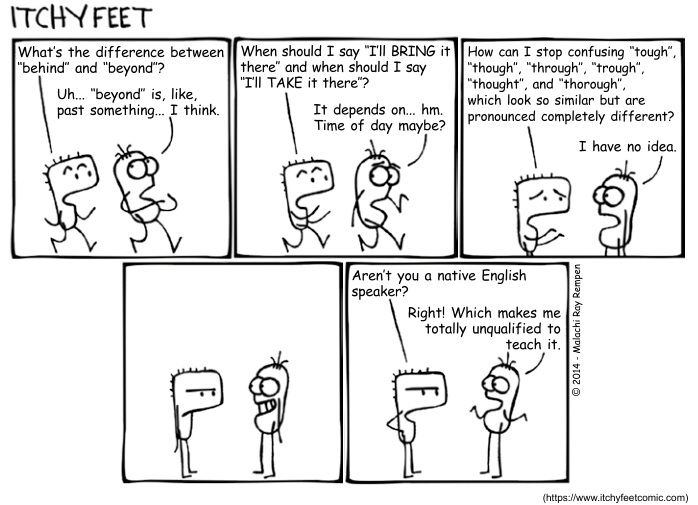
A última fala do quadrinho “Right! Which makes me totally unqualified to teach it”

😭 Você errou!   Resposta: 😘 Parabéns! Você acertou!

Escolha quais comentários gostaria de ver

Carregando marcador...

COMO A MIA PODE AJUDAR?

🔒 Tire sua dúvidaDisponível nos planos pagos.
🔒 Plano de revisãoUtilize a MIA para gerar um plano de revisão com base no seu desempenho na plataforma.

Compartilhe esta questão

Envie para quem também está estudando.

Texto associado

What makes a teacher


The idea that if you know something, you can teach it, may seem a straight line. For a gifted few, it might be. But many experts argue that teaching children and young people requires knowing how to teach the content to achieve understanding that is useful to actual learning.

Knowing how to teach children and young people means having in-depth knowledge of pedagogy (varied philosophies of learning and teaching), assessment, learning styles and needs — and the varied complex dynamics that dictate the context for how effective teaching happens. This fundamental knowledge happens alongside opportunities to practise and refine one’s teaching skills.

This is the difference between being taught by qualified teachers and by people who know stuff. Knowing content is not synonymous with good teaching. Getting teachers into classrooms faster may fill classrooms, but at what cost? There is a cautionary tale here worth paying attention to.

Shortening, and in some cases not requiring teacher education at all, has been tried and failed. Studies have shown that a major predictor of student achievement is the preparedness of teachers. For teachers who have entered into classrooms via expedited pathways, evidence showed negative impacts for all student groups.

I fear we are on a road of short-term gain for long-term pain.

In any society, a well-trained certified workforce supports continuity of learning and achievement. We wouldn’t contemplate having an unqualified doctor treat us any more than we want an uncertified electrician wiring our house. So why is an unqualified teacher OK? Our children deserve better.

(http://theconversation.com, 25.05.2026. Adaptado)

In the three last paragraphs, the author of the text, mainly,

😭 Você errou!   Resposta: 😘 Parabéns! Você acertou!

Escolha quais comentários gostaria de ver

Carregando marcador...

COMO A MIA PODE AJUDAR?

🔒 Tire sua dúvidaDisponível nos planos pagos.
🔒 Plano de revisãoUtilize a MIA para gerar um plano de revisão com base no seu desempenho na plataforma.

Compartilhe esta questão

Envie para quem também está estudando.

Texto associado

What makes a teacher


The idea that if you know something, you can teach it, may seem a straight line. For a gifted few, it might be. But many experts argue that teaching children and young people requires knowing how to teach the content to achieve understanding that is useful to actual learning.

Knowing how to teach children and young people means having in-depth knowledge of pedagogy (varied philosophies of learning and teaching), assessment, learning styles and needs — and the varied complex dynamics that dictate the context for how effective teaching happens. This fundamental knowledge happens alongside opportunities to practise and refine one’s teaching skills.

This is the difference between being taught by qualified teachers and by people who know stuff. Knowing content is not synonymous with good teaching. Getting teachers into classrooms faster may fill classrooms, but at what cost? There is a cautionary tale here worth paying attention to.

Shortening, and in some cases not requiring teacher education at all, has been tried and failed. Studies have shown that a major predictor of student achievement is the preparedness of teachers. For teachers who have entered into classrooms via expedited pathways, evidence showed negative impacts for all student groups.

I fear we are on a road of short-term gain for long-term pain.

In any society, a well-trained certified workforce supports continuity of learning and achievement. We wouldn’t contemplate having an unqualified doctor treat us any more than we want an uncertified electrician wiring our house. So why is an unqualified teacher OK? Our children deserve better.

(http://theconversation.com, 25.05.2026. Adaptado)

While reading the text, a certain reader comes across the expression “people who know stuff”, whose meaning they do not identify at first sight. In order to try to understand what the expression means, this reader may pay attention to context and employ the reading strategy known as

😭 Você errou!   Resposta: 😘 Parabéns! Você acertou!

Escolha quais comentários gostaria de ver

Carregando marcador...

COMO A MIA PODE AJUDAR?

🔒 Tire sua dúvidaDisponível nos planos pagos.
🔒 Plano de revisãoUtilize a MIA para gerar um plano de revisão com base no seu desempenho na plataforma.

Compartilhe esta questão

Envie para quem também está estudando.

Texto associado

What makes a teacher


The idea that if you know something, you can teach it, may seem a straight line. For a gifted few, it might be. But many experts argue that teaching children and young people requires knowing how to teach the content to achieve understanding that is useful to actual learning.

Knowing how to teach children and young people means having in-depth knowledge of pedagogy (varied philosophies of learning and teaching), assessment, learning styles and needs — and the varied complex dynamics that dictate the context for how effective teaching happens. This fundamental knowledge happens alongside opportunities to practise and refine one’s teaching skills.

This is the difference between being taught by qualified teachers and by people who know stuff. Knowing content is not synonymous with good teaching. Getting teachers into classrooms faster may fill classrooms, but at what cost? There is a cautionary tale here worth paying attention to.

Shortening, and in some cases not requiring teacher education at all, has been tried and failed. Studies have shown that a major predictor of student achievement is the preparedness of teachers. For teachers who have entered into classrooms via expedited pathways, evidence showed negative impacts for all student groups.

I fear we are on a road of short-term gain for long-term pain.

In any society, a well-trained certified workforce supports continuity of learning and achievement. We wouldn’t contemplate having an unqualified doctor treat us any more than we want an uncertified electrician wiring our house. So why is an unqualified teacher OK? Our children deserve better.

(http://theconversation.com, 25.05.2026. Adaptado)

The fragment from the third paragraph “people who know stuff” refers to

😭 Você errou!   Resposta: 😘 Parabéns! Você acertou!

Escolha quais comentários gostaria de ver

Carregando marcador...

COMO A MIA PODE AJUDAR?

🔒 Tire sua dúvidaDisponível nos planos pagos.
🔒 Plano de revisãoUtilize a MIA para gerar um plano de revisão com base no seu desempenho na plataforma.

Compartilhe esta questão

Envie para quem também está estudando.

Texto associado

What makes a teacher


The idea that if you know something, you can teach it, may seem a straight line. For a gifted few, it might be. But many experts argue that teaching children and young people requires knowing how to teach the content to achieve understanding that is useful to actual learning.

Knowing how to teach children and young people means having in-depth knowledge of pedagogy (varied philosophies of learning and teaching), assessment, learning styles and needs — and the varied complex dynamics that dictate the context for how effective teaching happens. This fundamental knowledge happens alongside opportunities to practise and refine one’s teaching skills.

This is the difference between being taught by qualified teachers and by people who know stuff. Knowing content is not synonymous with good teaching. Getting teachers into classrooms faster may fill classrooms, but at what cost? There is a cautionary tale here worth paying attention to.

Shortening, and in some cases not requiring teacher education at all, has been tried and failed. Studies have shown that a major predictor of student achievement is the preparedness of teachers. For teachers who have entered into classrooms via expedited pathways, evidence showed negative impacts for all student groups.

I fear we are on a road of short-term gain for long-term pain.

In any society, a well-trained certified workforce supports continuity of learning and achievement. We wouldn’t contemplate having an unqualified doctor treat us any more than we want an uncertified electrician wiring our house. So why is an unqualified teacher OK? Our children deserve better.

(http://theconversation.com, 25.05.2026. Adaptado)

In the excerpt below (from paragraphs 1 and 2 in the text), the word which functions as an adjective in the context is:

…many experts argue that teaching (1) children and young people requires knowing how to teach the content to achieve understanding that is useful to actual learning (2).

Knowing how to teach children and young people means having in-depth knowledge of pedagogy (varied philosophies of learning (3) and teaching, assessment, learning styles and needs — and the varied complex dynamics that dictate the context for how effective teaching (4) happens. This fundamental knowledge happens alongside opportunities to practise and refine one’s teaching (5) skills.

😭 Você errou!   Resposta: 😘 Parabéns! Você acertou!

Escolha quais comentários gostaria de ver

Carregando marcador...

COMO A MIA PODE AJUDAR?

🔒 Tire sua dúvidaDisponível nos planos pagos.
🔒 Plano de revisãoUtilize a MIA para gerar um plano de revisão com base no seu desempenho na plataforma.

Compartilhe esta questão

Envie para quem também está estudando.

Texto associado

What makes a teacher


The idea that if you know something, you can teach it, may seem a straight line. For a gifted few, it might be. But many experts argue that teaching children and young people requires knowing how to teach the content to achieve understanding that is useful to actual learning.

Knowing how to teach children and young people means having in-depth knowledge of pedagogy (varied philosophies of learning and teaching), assessment, learning styles and needs — and the varied complex dynamics that dictate the context for how effective teaching happens. This fundamental knowledge happens alongside opportunities to practise and refine one’s teaching skills.

This is the difference between being taught by qualified teachers and by people who know stuff. Knowing content is not synonymous with good teaching. Getting teachers into classrooms faster may fill classrooms, but at what cost? There is a cautionary tale here worth paying attention to.

Shortening, and in some cases not requiring teacher education at all, has been tried and failed. Studies have shown that a major predictor of student achievement is the preparedness of teachers. For teachers who have entered into classrooms via expedited pathways, evidence showed negative impacts for all student groups.

I fear we are on a road of short-term gain for long-term pain.

In any society, a well-trained certified workforce supports continuity of learning and achievement. We wouldn’t contemplate having an unqualified doctor treat us any more than we want an uncertified electrician wiring our house. So why is an unqualified teacher OK? Our children deserve better.

(http://theconversation.com, 25.05.2026. Adaptado)

The combination of a teacher’s in-depth understanding of pedagogical theories (as described in the first sentence of the second paragraph) together with their experience and awareness acquired through practice in the classroom has been more recently referred to as a teacher’s

😭 Você errou!   Resposta: 😘 Parabéns! Você acertou!

Escolha quais comentários gostaria de ver

Carregando marcador...

COMO A MIA PODE AJUDAR?

🔒 Tire sua dúvidaDisponível nos planos pagos.
🔒 Plano de revisãoUtilize a MIA para gerar um plano de revisão com base no seu desempenho na plataforma.

Compartilhe esta questão

Envie para quem também está estudando.

Em uma escola municipal, a equipe pedagógica organizou um projeto que envolveu visitas ao museu da cidade, atividades em espaços esportivos da comunidade e a participação das famílias em ações culturais desenvolvidas pelos estudantes. Assinale a alternativa que apresenta corretamente a descrição quanto à compreensão de currículo:

😭 Você errou!   Resposta: 😘 Parabéns! Você acertou!

Escolha quais comentários gostaria de ver

Carregando marcador...

COMO A MIA PODE AJUDAR?

🔒 Tire sua dúvidaDisponível nos planos pagos.
🔒 Plano de revisãoUtilize a MIA para gerar um plano de revisão com base no seu desempenho na plataforma.

Compartilhe esta questão

Envie para quem também está estudando.

A efetivação da Educação em Direitos Humanos depende, entre outros fatores, da preparação adequada dos profissionais da educação para desenvolver práticas pedagógicas fundamentadas nos direitos humanos, na diversidade e na participação democrática.

De acordo com o texto, a formação continuada dos profissionais da educação tem como finalidade:

😭 Você errou!   Resposta: 😘 Parabéns! Você acertou!

Escolha quais comentários gostaria de ver

Carregando marcador...

COMO A MIA PODE AJUDAR?

🔒 Tire sua dúvidaDisponível nos planos pagos.
🔒 Plano de revisãoUtilize a MIA para gerar um plano de revisão com base no seu desempenho na plataforma.

Compartilhe esta questão

Envie para quem também está estudando.

Ao planejar ações voltadas ao uso de tecnologias por crianças e adolescentes, uma escola decidiu promover atividades que envolvam a participação das famílias e dos educadores, considerando as características do desenvolvimento infantil e juvenil. De acordo com o texto, essa medida é importante porque:

😭 Você errou!   Resposta: 😘 Parabéns! Você acertou!

Escolha quais comentários gostaria de ver

Carregando marcador...

COMO A MIA PODE AJUDAR?

🔒 Tire sua dúvidaDisponível nos planos pagos.
🔒 Plano de revisãoUtilize a MIA para gerar um plano de revisão com base no seu desempenho na plataforma.

Compartilhe esta questão

Envie para quem também está estudando.