Questões de concursos

Pratique com questões de concursos anteriores. Selecione disciplinas e assuntos do seu edital e refine a busca por banca, órgão, cargo e ano.

Filtrado por:
As alterações serão aplicadas ao filtrar.
Encontradas 2604 questões
Texto associado
What CLT is NOT CLT
(Communicative Language Teaching) is not exclusively concerned with face-to-face oral communication. The principles of CLT apply equally to reading and writing activities that involve readers and writers engaged in the interpretation, expression and negotiation of meaning; the goals of CLT depend on learner needs in a given context. CLT does not require small-group or pair work; group tasks are seen as a way of providing increased opportunity and motivation for communication. Finally, CLT does not exclude a focus on metalinguistic awareness or knowledge of rules of syntax, discourse and register appropriateness. The essence of CLT is the engagement of leaners in communication in order to allow them to develop their communicative competence.
(SAVIGNON, S. J. Communicative language teaching for the Twenty-first century. In: CERCE-MURCIA, M. (ed). Teaching English as a second or foreign language. Boston, Massachusstes: Heinle&Heinle. 2001. Adaptado)

Este texto encontra-se basicamente no tempo verbal simple present porque

😭 Você errou!   Resposta: 😘 Parabéns! Você acertou!

Escolha quais comentários gostaria de ver

Carregando marcador...

COMO A MIA PODE AJUDAR?

🔒 Tire sua dúvidaDisponível nos planos pagos.
🔒 Plano de revisãoUtilize a MIA para gerar um plano de revisão com base no seu desempenho na plataforma.
Texto associado
What CLT is NOT CLT
(Communicative Language Teaching) is not exclusively concerned with face-to-face oral communication. The principles of CLT apply equally to reading and writing activities that involve readers and writers engaged in the interpretation, expression and negotiation of meaning; the goals of CLT depend on learner needs in a given context. CLT does not require small-group or pair work; group tasks are seen as a way of providing increased opportunity and motivation for communication. Finally, CLT does not exclude a focus on metalinguistic awareness or knowledge of rules of syntax, discourse and register appropriateness. The essence of CLT is the engagement of leaners in communication in order to allow them to develop their communicative competence.
(SAVIGNON, S. J. Communicative language teaching for the Twenty-first century. In: CERCE-MURCIA, M. (ed). Teaching English as a second or foreign language. Boston, Massachusstes: Heinle&Heinle. 2001. Adaptado)

According to the author of the text, in CLT,

😭 Você errou!   Resposta: 😘 Parabéns! Você acertou!

Escolha quais comentários gostaria de ver

Carregando marcador...

COMO A MIA PODE AJUDAR?

🔒 Tire sua dúvidaDisponível nos planos pagos.
🔒 Plano de revisãoUtilize a MIA para gerar um plano de revisão com base no seu desempenho na plataforma.
Texto associado
A number of researchers have studied conversations between speakers of English as a Lingua Franca and have noted a number of somewhat surprising characteristics, including: •  Use of an all-purpose tag question such as isn’t it? (They should arrive soon, isn’t it?)
  • •  Increasing of redundancy by adding prepositions {We have to study about… and Can we discuss about…)
  • •  Pluralisation of nouns which are considered uncountable in native-speaker English. (informations, staffs)
The evidence suggests that non-native speakers are not conforming to a native English standard. Truly, they seem to get along perfectly well despite the fact that they miss things out and put things in which ‘they should not do’.
(HARMER, J. The practice of English language teaching. 4th ed, Essex: Pearson Longman. Adaptado)

A palavra em que a letra u é pronunciada assim como em “number” encontra-se na alternativa

😭 Você errou!   Resposta: 😘 Parabéns! Você acertou!

Escolha quais comentários gostaria de ver

Carregando marcador...

COMO A MIA PODE AJUDAR?

🔒 Tire sua dúvidaDisponível nos planos pagos.
🔒 Plano de revisãoUtilize a MIA para gerar um plano de revisão com base no seu desempenho na plataforma.
Texto associado
A number of researchers have studied conversations between speakers of English as a Lingua Franca and have noted a number of somewhat surprising characteristics, including: •  Use of an all-purpose tag question such as isn’t it? (They should arrive soon, isn’t it?)
  • •  Increasing of redundancy by adding prepositions {We have to study about… and Can we discuss about…)
  • •  Pluralisation of nouns which are considered uncountable in native-speaker English. (informations, staffs)
The evidence suggests that non-native speakers are not conforming to a native English standard. Truly, they seem to get along perfectly well despite the fact that they miss things out and put things in which ‘they should not do’.
(HARMER, J. The practice of English language teaching. 4th ed, Essex: Pearson Longman. Adaptado)

Na proposta de ensino de inglês descrita na BNCC, frases como “These ideas are difficult to understand, isn’t it?” or “We have new informations about the weather”, se produzidas por um aprendiz brasileiro,

😭 Você errou!   Resposta: 😘 Parabéns! Você acertou!

Escolha quais comentários gostaria de ver

Carregando marcador...

COMO A MIA PODE AJUDAR?

🔒 Tire sua dúvidaDisponível nos planos pagos.
🔒 Plano de revisãoUtilize a MIA para gerar um plano de revisão com base no seu desempenho na plataforma.
Texto associado
A number of researchers have studied conversations between speakers of English as a Lingua Franca and have noted a number of somewhat surprising characteristics, including: •  Use of an all-purpose tag question such as isn’t it? (They should arrive soon, isn’t it?)
  • •  Increasing of redundancy by adding prepositions {We have to study about… and Can we discuss about…)
  • •  Pluralisation of nouns which are considered uncountable in native-speaker English. (informations, staffs)
The evidence suggests that non-native speakers are not conforming to a native English standard. Truly, they seem to get along perfectly well despite the fact that they miss things out and put things in which ‘they should not do’.
(HARMER, J. The practice of English language teaching. 4th ed, Essex: Pearson Longman. Adaptado)

In the context of the last paragraph, the phrase “conforming to” means the same as

😭 Você errou!   Resposta: 😘 Parabéns! Você acertou!

Escolha quais comentários gostaria de ver

Carregando marcador...

COMO A MIA PODE AJUDAR?

🔒 Tire sua dúvidaDisponível nos planos pagos.
🔒 Plano de revisãoUtilize a MIA para gerar um plano de revisão com base no seu desempenho na plataforma.
Texto associado
A number of researchers have studied conversations between speakers of English as a Lingua Franca and have noted a number of somewhat surprising characteristics, including: •  Use of an all-purpose tag question such as isn’t it? (They should arrive soon, isn’t it?)
  • •  Increasing of redundancy by adding prepositions {We have to study about… and Can we discuss about…)
  • •  Pluralisation of nouns which are considered uncountable in native-speaker English. (informations, staffs)
The evidence suggests that non-native speakers are not conforming to a native English standard. Truly, they seem to get along perfectly well despite the fact that they miss things out and put things in which ‘they should not do’.
(HARMER, J. The practice of English language teaching. 4th ed, Essex: Pearson Longman. Adaptado)

Correct use of an uncountable noun is found in the bolded expression in:

😭 Você errou!   Resposta: 😘 Parabéns! Você acertou!

Escolha quais comentários gostaria de ver

Carregando marcador...

COMO A MIA PODE AJUDAR?

🔒 Tire sua dúvidaDisponível nos planos pagos.
🔒 Plano de revisãoUtilize a MIA para gerar um plano de revisão com base no seu desempenho na plataforma.
Texto associado
A number of researchers have studied conversations between speakers of English as a Lingua Franca and have noted a number of somewhat surprising characteristics, including: •  Use of an all-purpose tag question such as isn’t it? (They should arrive soon, isn’t it?)
  • •  Increasing of redundancy by adding prepositions {We have to study about… and Can we discuss about…)
  • •  Pluralisation of nouns which are considered uncountable in native-speaker English. (informations, staffs)
The evidence suggests that non-native speakers are not conforming to a native English standard. Truly, they seem to get along perfectly well despite the fact that they miss things out and put things in which ‘they should not do’.
(HARMER, J. The practice of English language teaching. 4th ed, Essex: Pearson Longman. Adaptado)

O trecho ao final do excerto de Harmer “they miss things out and put things in which ‘they should not do’” ecoa as crenças de um professor de inglês que segue

😭 Você errou!   Resposta: 😘 Parabéns! Você acertou!

Escolha quais comentários gostaria de ver

Carregando marcador...

COMO A MIA PODE AJUDAR?

🔒 Tire sua dúvidaDisponível nos planos pagos.
🔒 Plano de revisãoUtilize a MIA para gerar um plano de revisão com base no seu desempenho na plataforma.
Texto associado
A BNCC prioriza o foco da função social e política da língua inglesa e, nesse sentido, passa a tratá-la em seu status de língua franca. Nessa perspectiva, são acolhidos e legitimados os usos que dela fazem falantes espalhados no mundo inteiro, com diferentes repertórios linguísticos e culturais, o que possibilita, por exemplo, questionar a visão de que o único inglês “correto” – e a ser ensinado – é aquele falado por estadunidenses ou britânicos. Mais ainda, o tratamento do inglês como língua franca o desvincula da noção de pertencimento a um determinado território e, consequentemente, a culturas típicas de comunidades específicas, legitimando os usos da língua inglesa em seus contextos locais. Esse entendimento favorece uma educação linguística voltada para a interculturalidade.
(BRASIL. Base Nacional Comum Curricular. 2019. Adaptado)

Em uma entrevista, o linguista Kanavilil Rajagopalan afirma que “A língua inglesa, já há um bom tempo, deixou de ser propriedade desse ou daquele país. Em sua condição de língua internacional, a língua falada hoje por quase um terço dos seres humanos do planeta, não faz o menor sentido falarmos em falantes nativos. Essa língua, esse “fenômeno linguístico”, na verdade pertence a todos que dela fazem algum uso no seu dia a dia, por mais restrito que ele seja (como ouvir música ou ler manuais de instrução). Como professores de inglês, é nosso dever preparar nossos alunos para serem cidadãos do mundo novo que se descortina diante de nossos olhos. Para atuar nesse admirável mundo novo, os nossos alunos têm de aprender a lidar com todas as formas de inglês.”
(RAJAGOPALAN, K. O inglês como língua internacional na prática docente. In: LIMA, D.C. (Org.). Ensino e aprendizagem. São Paulo: Parábola Editorial, 2009. pp. 39; 41; 45. Adaptado)

A perspectiva de uma educação linguística voltada para a interculturalidade, segundo a compreensão da BNCC, caracteriza-se

😭 Você errou!   Resposta: 😘 Parabéns! Você acertou!

Escolha quais comentários gostaria de ver

Carregando marcador...

COMO A MIA PODE AJUDAR?

🔒 Tire sua dúvidaDisponível nos planos pagos.
🔒 Plano de revisãoUtilize a MIA para gerar um plano de revisão com base no seu desempenho na plataforma.
Texto associado
A BNCC prioriza o foco da função social e política da língua inglesa e, nesse sentido, passa a tratá-la em seu status de língua franca. Nessa perspectiva, são acolhidos e legitimados os usos que dela fazem falantes espalhados no mundo inteiro, com diferentes repertórios linguísticos e culturais, o que possibilita, por exemplo, questionar a visão de que o único inglês “correto” – e a ser ensinado – é aquele falado por estadunidenses ou britânicos. Mais ainda, o tratamento do inglês como língua franca o desvincula da noção de pertencimento a um determinado território e, consequentemente, a culturas típicas de comunidades específicas, legitimando os usos da língua inglesa em seus contextos locais. Esse entendimento favorece uma educação linguística voltada para a interculturalidade.
(BRASIL. Base Nacional Comum Curricular. 2019. Adaptado)

Em uma entrevista, o linguista Kanavilil Rajagopalan afirma que “A língua inglesa, já há um bom tempo, deixou de ser propriedade desse ou daquele país. Em sua condição de língua internacional, a língua falada hoje por quase um terço dos seres humanos do planeta, não faz o menor sentido falarmos em falantes nativos. Essa língua, esse “fenômeno linguístico”, na verdade pertence a todos que dela fazem algum uso no seu dia a dia, por mais restrito que ele seja (como ouvir música ou ler manuais de instrução). Como professores de inglês, é nosso dever preparar nossos alunos para serem cidadãos do mundo novo que se descortina diante de nossos olhos. Para atuar nesse admirável mundo novo, os nossos alunos têm de aprender a lidar com todas as formas de inglês.”
(RAJAGOPALAN, K. O inglês como língua internacional na prática docente. In: LIMA, D.C. (Org.). Ensino e aprendizagem. São Paulo: Parábola Editorial, 2009. pp. 39; 41; 45. Adaptado)

Entende-se, a partir dos dois excertos, que o professor de inglês em escolas brasileiras deva

😭 Você errou!   Resposta: 😘 Parabéns! Você acertou!

Escolha quais comentários gostaria de ver

Carregando marcador...

COMO A MIA PODE AJUDAR?

🔒 Tire sua dúvidaDisponível nos planos pagos.
🔒 Plano de revisãoUtilize a MIA para gerar um plano de revisão com base no seu desempenho na plataforma.

Leia os dois excertos a seguir:

No atual cenário escolar, é possível observar que as TIC são introduzidas nas salas de aula como recursos que facilitam o processo de ensino e aprendizagem das diferentes disciplinas, bem como favorecem a obtenção do conhecimento em uma língua estrangeira, como é o caso da língua inglesa (Magalhães; Machado; Silva, 2015). Deste modo, o grande desafio dos professores de línguas estrangeiras do século XXI implica saber usufruir dessas ferramentas para potencializar o desenvolvimento, em seus alunos, das competências e habilidades em um segundo idioma.

(NASCIMENTO, H. C. M. Tecnologias de informação e comunicação como ferramentas facilitadoras do processo de ensino e aprendizagem da Língua Inglesa. Revista Educação Pública, v. 21, no 15, 2021)

The digital revolution is far more significant than potential for humans to learn new ways of thinking and organizing social structures.
(DEMA, O., MOELLER, A. K. Teaching culture in the 21st century language classroom. SILDUS, T. (ed.). Touch the World: Selected Papers from the 2012 Central States Conference on the Teaching of Foreign Languages. Eau Claire: Crown Prints)

Os dois excertos destacam a relevância, nos tempos atuais, do desenvolvimento
😭 Você errou!   Resposta: 😘 Parabéns! Você acertou!

Escolha quais comentários gostaria de ver

Carregando marcador...

COMO A MIA PODE AJUDAR?

🔒 Tire sua dúvidaDisponível nos planos pagos.
🔒 Plano de revisãoUtilize a MIA para gerar um plano de revisão com base no seu desempenho na plataforma.
Texto associado
In the Star Trek universe, the audience occasionally gets a glimpse inside schools on the planet Vulcan. Young children stand alone in “capsules” surrounded by 360-degree digital screens. Adults walk around but do not talk to the students. Instead, each child interacts only with a sophisticated artificial intelligence (AI). Although this is not the reality in today’s classrooms on Earth, there are people for whom a vision of personalized learning conducted by artificial intelligence has considerable appeal.
Individualized learning has its place. But decades of educational research also demonstrate that learning is essentially a social endeavor. Classrooms that privilege personalized AI chatbots overlook that fact.
Generative AI is quickly coming to classrooms. If decades ago educators worldwide promoted the benefits of “One Laptop per Child”, today we may be approaching the model “one chatbot per child.” What does educational research tell us about what this model could mean for children’s learning and well-being?
During much of the 20th century, learning was understood as mainly as a matter of individual cognition. A misconception, if compared to today’s comprehension of what learning involves. Scientists now understand that apparently individual processes – such as building new knowledge – are actually social interactions with the world around us. In classrooms, this suggests that opportunities for daily personal interaction can strongly support brain health and academic learning.
Therefore, it is important to understand generative AI’s real-life impact on students.
For example: How does it feel to learn from a chatbot, day after day? How will long-term use of AI affect children’s mental health? How does AI use affect children’s relationships with each other and with their teachers? What kinds of relationships might children form with the chatbots themselves? More broadly, we could also ask: What do we, as a society, actually want children to learn?
Good teaching and learning blends social and individual processes. I see the beneficial application of any new technology in the classroom – AI or otherwise – as a way to build upon the social fabric of human learning. My concern about personalized AI tutors is how they might displace already infrequent opportunities for social interaction, further isolating children in classrooms.
(Niral Shah. www.converstion.com, 15.12.2025. Adaptado

Compare os conteúdos do texto e da charge a seguir:
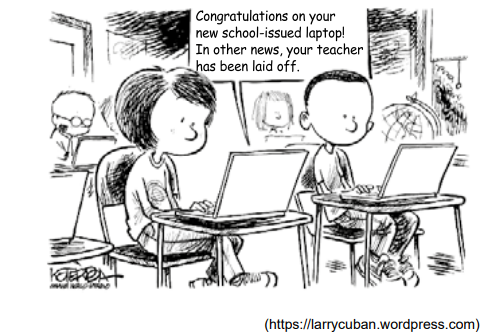
A imagem e as palavras na charge retratam a hipótese receada pelo autor do texto, qual seja,

😭 Você errou!   Resposta: 😘 Parabéns! Você acertou!

Escolha quais comentários gostaria de ver

Carregando marcador...

COMO A MIA PODE AJUDAR?

🔒 Tire sua dúvidaDisponível nos planos pagos.
🔒 Plano de revisãoUtilize a MIA para gerar um plano de revisão com base no seu desempenho na plataforma.
Texto associado
In the Star Trek universe, the audience occasionally gets a glimpse inside schools on the planet Vulcan. Young children stand alone in “capsules” surrounded by 360-degree digital screens. Adults walk around but do not talk to the students. Instead, each child interacts only with a sophisticated artificial intelligence (AI). Although this is not the reality in today’s classrooms on Earth, there are people for whom a vision of personalized learning conducted by artificial intelligence has considerable appeal.
Individualized learning has its place. But decades of educational research also demonstrate that learning is essentially a social endeavor. Classrooms that privilege personalized AI chatbots overlook that fact.
Generative AI is quickly coming to classrooms. If decades ago educators worldwide promoted the benefits of “One Laptop per Child”, today we may be approaching the model “one chatbot per child.” What does educational research tell us about what this model could mean for children’s learning and well-being?
During much of the 20th century, learning was understood as mainly as a matter of individual cognition. A misconception, if compared to today’s comprehension of what learning involves. Scientists now understand that apparently individual processes – such as building new knowledge – are actually social interactions with the world around us. In classrooms, this suggests that opportunities for daily personal interaction can strongly support brain health and academic learning.
Therefore, it is important to understand generative AI’s real-life impact on students.
For example: How does it feel to learn from a chatbot, day after day? How will long-term use of AI affect children’s mental health? How does AI use affect children’s relationships with each other and with their teachers? What kinds of relationships might children form with the chatbots themselves? More broadly, we could also ask: What do we, as a society, actually want children to learn?
Good teaching and learning blends social and individual processes. I see the beneficial application of any new technology in the classroom – AI or otherwise – as a way to build upon the social fabric of human learning. My concern about personalized AI tutors is how they might displace already infrequent opportunities for social interaction, further isolating children in classrooms.
(Niral Shah. www.converstion.com, 15.12.2025. Adaptado

Suppose that this text is proposed as a reading activity in an English Teachers’ Development Program in Brazil. 

A post-reading discussion aimed at encouraging participants to critically react to the author’s views on the topic could include their reflecting on

😭 Você errou!   Resposta: 😘 Parabéns! Você acertou!

Escolha quais comentários gostaria de ver

Carregando marcador...

COMO A MIA PODE AJUDAR?

🔒 Tire sua dúvidaDisponível nos planos pagos.
🔒 Plano de revisãoUtilize a MIA para gerar um plano de revisão com base no seu desempenho na plataforma.
Texto associado
In the Star Trek universe, the audience occasionally gets a glimpse inside schools on the planet Vulcan. Young children stand alone in “capsules” surrounded by 360-degree digital screens. Adults walk around but do not talk to the students. Instead, each child interacts only with a sophisticated artificial intelligence (AI). Although this is not the reality in today’s classrooms on Earth, there are people for whom a vision of personalized learning conducted by artificial intelligence has considerable appeal.
Individualized learning has its place. But decades of educational research also demonstrate that learning is essentially a social endeavor. Classrooms that privilege personalized AI chatbots overlook that fact.
Generative AI is quickly coming to classrooms. If decades ago educators worldwide promoted the benefits of “One Laptop per Child”, today we may be approaching the model “one chatbot per child.” What does educational research tell us about what this model could mean for children’s learning and well-being?
During much of the 20th century, learning was understood as mainly as a matter of individual cognition. A misconception, if compared to today’s comprehension of what learning involves. Scientists now understand that apparently individual processes – such as building new knowledge – are actually social interactions with the world around us. In classrooms, this suggests that opportunities for daily personal interaction can strongly support brain health and academic learning.
Therefore, it is important to understand generative AI’s real-life impact on students.
For example: How does it feel to learn from a chatbot, day after day? How will long-term use of AI affect children’s mental health? How does AI use affect children’s relationships with each other and with their teachers? What kinds of relationships might children form with the chatbots themselves? More broadly, we could also ask: What do we, as a society, actually want children to learn?
Good teaching and learning blends social and individual processes. I see the beneficial application of any new technology in the classroom – AI or otherwise – as a way to build upon the social fabric of human learning. My concern about personalized AI tutors is how they might displace already infrequent opportunities for social interaction, further isolating children in classrooms.
(Niral Shah. www.converstion.com, 15.12.2025. Adaptado

The five direct questions in the fifth paragraph have been rewritten as indirect questions. The only correct pair of sentences is found in alternative:

😭 Você errou!   Resposta: 😘 Parabéns! Você acertou!

Escolha quais comentários gostaria de ver

Carregando marcador...

COMO A MIA PODE AJUDAR?

🔒 Tire sua dúvidaDisponível nos planos pagos.
🔒 Plano de revisãoUtilize a MIA para gerar um plano de revisão com base no seu desempenho na plataforma.
Texto associado
In the Star Trek universe, the audience occasionally gets a glimpse inside schools on the planet Vulcan. Young children stand alone in “capsules” surrounded by 360-degree digital screens. Adults walk around but do not talk to the students. Instead, each child interacts only with a sophisticated artificial intelligence (AI). Although this is not the reality in today’s classrooms on Earth, there are people for whom a vision of personalized learning conducted by artificial intelligence has considerable appeal.
Individualized learning has its place. But decades of educational research also demonstrate that learning is essentially a social endeavor. Classrooms that privilege personalized AI chatbots overlook that fact.
Generative AI is quickly coming to classrooms. If decades ago educators worldwide promoted the benefits of “One Laptop per Child”, today we may be approaching the model “one chatbot per child.” What does educational research tell us about what this model could mean for children’s learning and well-being?
During much of the 20th century, learning was understood as mainly as a matter of individual cognition. A misconception, if compared to today’s comprehension of what learning involves. Scientists now understand that apparently individual processes – such as building new knowledge – are actually social interactions with the world around us. In classrooms, this suggests that opportunities for daily personal interaction can strongly support brain health and academic learning.
Therefore, it is important to understand generative AI’s real-life impact on students.
For example: How does it feel to learn from a chatbot, day after day? How will long-term use of AI affect children’s mental health? How does AI use affect children’s relationships with each other and with their teachers? What kinds of relationships might children form with the chatbots themselves? More broadly, we could also ask: What do we, as a society, actually want children to learn?
Good teaching and learning blends social and individual processes. I see the beneficial application of any new technology in the classroom – AI or otherwise – as a way to build upon the social fabric of human learning. My concern about personalized AI tutors is how they might displace already infrequent opportunities for social interaction, further isolating children in classrooms.
(Niral Shah. www.converstion.com, 15.12.2025. Adaptado

From the words below, the one in which the prefix mis- has the same meaning as in “mis-conception” (paragraph 4) is

😭 Você errou!   Resposta: 😘 Parabéns! Você acertou!

Escolha quais comentários gostaria de ver

Carregando marcador...

COMO A MIA PODE AJUDAR?

🔒 Tire sua dúvidaDisponível nos planos pagos.
🔒 Plano de revisãoUtilize a MIA para gerar um plano de revisão com base no seu desempenho na plataforma.
Texto associado
In the Star Trek universe, the audience occasionally gets a glimpse inside schools on the planet Vulcan. Young children stand alone in “capsules” surrounded by 360-degree digital screens. Adults walk around but do not talk to the students. Instead, each child interacts only with a sophisticated artificial intelligence (AI). Although this is not the reality in today’s classrooms on Earth, there are people for whom a vision of personalized learning conducted by artificial intelligence has considerable appeal.
Individualized learning has its place. But decades of educational research also demonstrate that learning is essentially a social endeavor. Classrooms that privilege personalized AI chatbots overlook that fact.
Generative AI is quickly coming to classrooms. If decades ago educators worldwide promoted the benefits of “One Laptop per Child”, today we may be approaching the model “one chatbot per child.” What does educational research tell us about what this model could mean for children’s learning and well-being?
During much of the 20th century, learning was understood as mainly as a matter of individual cognition. A misconception, if compared to today’s comprehension of what learning involves. Scientists now understand that apparently individual processes – such as building new knowledge – are actually social interactions with the world around us. In classrooms, this suggests that opportunities for daily personal interaction can strongly support brain health and academic learning.
Therefore, it is important to understand generative AI’s real-life impact on students.
For example: How does it feel to learn from a chatbot, day after day? How will long-term use of AI affect children’s mental health? How does AI use affect children’s relationships with each other and with their teachers? What kinds of relationships might children form with the chatbots themselves? More broadly, we could also ask: What do we, as a society, actually want children to learn?
Good teaching and learning blends social and individual processes. I see the beneficial application of any new technology in the classroom – AI or otherwise – as a way to build upon the social fabric of human learning. My concern about personalized AI tutors is how they might displace already infrequent opportunities for social interaction, further isolating children in classrooms.
(Niral Shah. www.converstion.com, 15.12.2025. Adaptado

Choose the alternative in which the bolded word is an adjective in the context.

During much of the 20th century, learning was understood mainly as a matter of individual cognition. In contrast, scientists now understand that apparently individual processes – such as building new knowledge – are actually social interactions with the world around us. In classrooms, this suggests that opportunities for daily personal interaction can strongly support brain health and academic learning. (paragraph 4)

😭 Você errou!   Resposta: 😘 Parabéns! Você acertou!

Escolha quais comentários gostaria de ver

Carregando marcador...

COMO A MIA PODE AJUDAR?

🔒 Tire sua dúvidaDisponível nos planos pagos.
🔒 Plano de revisãoUtilize a MIA para gerar um plano de revisão com base no seu desempenho na plataforma.
Texto associado
In the Star Trek universe, the audience occasionally gets a glimpse inside schools on the planet Vulcan. Young children stand alone in “capsules” surrounded by 360-degree digital screens. Adults walk around but do not talk to the students. Instead, each child interacts only with a sophisticated artificial intelligence (AI). Although this is not the reality in today’s classrooms on Earth, there are people for whom a vision of personalized learning conducted by artificial intelligence has considerable appeal.
Individualized learning has its place. But decades of educational research also demonstrate that learning is essentially a social endeavor. Classrooms that privilege personalized AI chatbots overlook that fact.
Generative AI is quickly coming to classrooms. If decades ago educators worldwide promoted the benefits of “One Laptop per Child”, today we may be approaching the model “one chatbot per child.” What does educational research tell us about what this model could mean for children’s learning and well-being?
During much of the 20th century, learning was understood as mainly as a matter of individual cognition. A misconception, if compared to today’s comprehension of what learning involves. Scientists now understand that apparently individual processes – such as building new knowledge – are actually social interactions with the world around us. In classrooms, this suggests that opportunities for daily personal interaction can strongly support brain health and academic learning.
Therefore, it is important to understand generative AI’s real-life impact on students.
For example: How does it feel to learn from a chatbot, day after day? How will long-term use of AI affect children’s mental health? How does AI use affect children’s relationships with each other and with their teachers? What kinds of relationships might children form with the chatbots themselves? More broadly, we could also ask: What do we, as a society, actually want children to learn?
Good teaching and learning blends social and individual processes. I see the beneficial application of any new technology in the classroom – AI or otherwise – as a way to build upon the social fabric of human learning. My concern about personalized AI tutors is how they might displace already infrequent opportunities for social interaction, further isolating children in classrooms.
(Niral Shah. www.converstion.com, 15.12.2025. Adaptado

In the fragment from the third paragraph “today we may be approaching the model ‘one chatbot per child’”, the bolded modal verb carries the idea of

😭 Você errou!   Resposta: 😘 Parabéns! Você acertou!

Escolha quais comentários gostaria de ver

Carregando marcador...

COMO A MIA PODE AJUDAR?

🔒 Tire sua dúvidaDisponível nos planos pagos.
🔒 Plano de revisãoUtilize a MIA para gerar um plano de revisão com base no seu desempenho na plataforma.
Texto associado
In the Star Trek universe, the audience occasionally gets a glimpse inside schools on the planet Vulcan. Young children stand alone in “capsules” surrounded by 360-degree digital screens. Adults walk around but do not talk to the students. Instead, each child interacts only with a sophisticated artificial intelligence (AI). Although this is not the reality in today’s classrooms on Earth, there are people for whom a vision of personalized learning conducted by artificial intelligence has considerable appeal.
Individualized learning has its place. But decades of educational research also demonstrate that learning is essentially a social endeavor. Classrooms that privilege personalized AI chatbots overlook that fact.
Generative AI is quickly coming to classrooms. If decades ago educators worldwide promoted the benefits of “One Laptop per Child”, today we may be approaching the model “one chatbot per child.” What does educational research tell us about what this model could mean for children’s learning and well-being?
During much of the 20th century, learning was understood as mainly as a matter of individual cognition. A misconception, if compared to today’s comprehension of what learning involves. Scientists now understand that apparently individual processes – such as building new knowledge – are actually social interactions with the world around us. In classrooms, this suggests that opportunities for daily personal interaction can strongly support brain health and academic learning.
Therefore, it is important to understand generative AI’s real-life impact on students.
For example: How does it feel to learn from a chatbot, day after day? How will long-term use of AI affect children’s mental health? How does AI use affect children’s relationships with each other and with their teachers? What kinds of relationships might children form with the chatbots themselves? More broadly, we could also ask: What do we, as a society, actually want children to learn?
Good teaching and learning blends social and individual processes. I see the beneficial application of any new technology in the classroom – AI or otherwise – as a way to build upon the social fabric of human learning. My concern about personalized AI tutors is how they might displace already infrequent opportunities for social interaction, further isolating children in classrooms.
(Niral Shah. www.converstion.com, 15.12.2025. Adaptado

Careful reading of the second paragraph helps understand the meaning of the verb “overlook” as

😭 Você errou!   Resposta: 😘 Parabéns! Você acertou!

Escolha quais comentários gostaria de ver

Carregando marcador...

COMO A MIA PODE AJUDAR?

🔒 Tire sua dúvidaDisponível nos planos pagos.
🔒 Plano de revisãoUtilize a MIA para gerar um plano de revisão com base no seu desempenho na plataforma.
Texto associado
In the Star Trek universe, the audience occasionally gets a glimpse inside schools on the planet Vulcan. Young children stand alone in “capsules” surrounded by 360-degree digital screens. Adults walk around but do not talk to the students. Instead, each child interacts only with a sophisticated artificial intelligence (AI). Although this is not the reality in today’s classrooms on Earth, there are people for whom a vision of personalized learning conducted by artificial intelligence has considerable appeal.
Individualized learning has its place. But decades of educational research also demonstrate that learning is essentially a social endeavor. Classrooms that privilege personalized AI chatbots overlook that fact.
Generative AI is quickly coming to classrooms. If decades ago educators worldwide promoted the benefits of “One Laptop per Child”, today we may be approaching the model “one chatbot per child.” What does educational research tell us about what this model could mean for children’s learning and well-being?
During much of the 20th century, learning was understood as mainly as a matter of individual cognition. A misconception, if compared to today’s comprehension of what learning involves. Scientists now understand that apparently individual processes – such as building new knowledge – are actually social interactions with the world around us. In classrooms, this suggests that opportunities for daily personal interaction can strongly support brain health and academic learning.
Therefore, it is important to understand generative AI’s real-life impact on students.
For example: How does it feel to learn from a chatbot, day after day? How will long-term use of AI affect children’s mental health? How does AI use affect children’s relationships with each other and with their teachers? What kinds of relationships might children form with the chatbots themselves? More broadly, we could also ask: What do we, as a society, actually want children to learn?
Good teaching and learning blends social and individual processes. I see the beneficial application of any new technology in the classroom – AI or otherwise – as a way to build upon the social fabric of human learning. My concern about personalized AI tutors is how they might displace already infrequent opportunities for social interaction, further isolating children in classrooms.
(Niral Shah. www.converstion.com, 15.12.2025. Adaptado

No contexto do primeiro parágrafo, o termo destacado em “Instead, each child interacts only with a sophisticated artificial intelligence” pode ser substituído, sem alteração de sentido, por

😭 Você errou!   Resposta: 😘 Parabéns! Você acertou!

Escolha quais comentários gostaria de ver

Carregando marcador...

COMO A MIA PODE AJUDAR?

🔒 Tire sua dúvidaDisponível nos planos pagos.
🔒 Plano de revisãoUtilize a MIA para gerar um plano de revisão com base no seu desempenho na plataforma.
Texto associado
In the Star Trek universe, the audience occasionally gets a glimpse inside schools on the planet Vulcan. Young children stand alone in “capsules” surrounded by 360-degree digital screens. Adults walk around but do not talk to the students. Instead, each child interacts only with a sophisticated artificial intelligence (AI). Although this is not the reality in today’s classrooms on Earth, there are people for whom a vision of personalized learning conducted by artificial intelligence has considerable appeal.
Individualized learning has its place. But decades of educational research also demonstrate that learning is essentially a social endeavor. Classrooms that privilege personalized AI chatbots overlook that fact.
Generative AI is quickly coming to classrooms. If decades ago educators worldwide promoted the benefits of “One Laptop per Child”, today we may be approaching the model “one chatbot per child.” What does educational research tell us about what this model could mean for children’s learning and well-being?
During much of the 20th century, learning was understood as mainly as a matter of individual cognition. A misconception, if compared to today’s comprehension of what learning involves. Scientists now understand that apparently individual processes – such as building new knowledge – are actually social interactions with the world around us. In classrooms, this suggests that opportunities for daily personal interaction can strongly support brain health and academic learning.
Therefore, it is important to understand generative AI’s real-life impact on students.
For example: How does it feel to learn from a chatbot, day after day? How will long-term use of AI affect children’s mental health? How does AI use affect children’s relationships with each other and with their teachers? What kinds of relationships might children form with the chatbots themselves? More broadly, we could also ask: What do we, as a society, actually want children to learn?
Good teaching and learning blends social and individual processes. I see the beneficial application of any new technology in the classroom – AI or otherwise – as a way to build upon the social fabric of human learning. My concern about personalized AI tutors is how they might displace already infrequent opportunities for social interaction, further isolating children in classrooms.
(Niral Shah. www.converstion.com, 15.12.2025. Adaptado

The text, mainly,

😭 Você errou!   Resposta: 😘 Parabéns! Você acertou!

Escolha quais comentários gostaria de ver

Carregando marcador...

COMO A MIA PODE AJUDAR?

🔒 Tire sua dúvidaDisponível nos planos pagos.
🔒 Plano de revisãoUtilize a MIA para gerar um plano de revisão com base no seu desempenho na plataforma.
Texto associado
Toda criança aprende. A condição humana é aprendida. Há alguns equívocos muito presentes nas tradições educacionais e pedagógicas atuais, a maioria deles sustentada por uma concepção inatista de aprendizagem. Fundamenta-se no pressuposto de que já nascemos com certas disposições para aprender ou não. Isso gera controvérsias e complexidades: alguns teriam as “capacidades” de aprendizagem, outros e outras não “teriam” essas qualidades.
Para nossa concepção de educação, os chamados bloqueios de aprendizagem devem ser analisados em sua totalidade, muito mais como um problema da tradição pedagógica autoritária e da forma conservadora de organizar a escola e o currículo do que uma suposta “falha” da criança. Hoje, a ditadura da sociedade tecnológica, a apelação consumista, a raridade de espaços humanizadores, a lacuna na formação artística, teatral, musical, fazem com que a indústria cultural seja um grande poluente sonoro e visual, chegando aos corações e mentes das crianças sem dispositivos de crítica da proposta pedagógica da escola, na direção de mostrar outra música, outro repertório, outras brincadeiras, outras danças.
Criar espaços de humanização, de exposição serena das crianças a outras coordenadas antropológicas, a outra atmosfera de sentido, a outra música, de outra arte, de alegria, de teatro, de conversas, ajuda muito a “desbloquear” qualquer pessoa! A escola, para mim, deve ter clareza de ser contraponto, competente e lúcido, à indústria cultural alienante e consumista. Mostrar os grandes mestres e mestras da humanidade, neste tempo especial de aprender, é um trunfo inaudito! O conhecimento sensível e a sensibilidade esclarecida são os condutores do afeto e da lucidez crítica. Ensinar a pensar e a sentir!
Precisamos superar os ritos classificatórios e meritocráticos tradicionais. Os pais e professores podem começar avaliando o contexto pleno da criança, seu mundo, seus estímulos, internos e externos, ouvindo suas queixas, aceitando suas versões, buscando superar as contradições que levam àquele resultado. Relativizar as notas escolares, hoje, pode ser um bom começo; depreende-se que a nota é resultante de uma estrutura baseada na memória e na retenção de informação. Ora, tomada estritamente, esta suposta qualidade mnemônica assemelha-se ao depositário de um “chip”, que está disponível na internet, o Google ou o ChatGPT “sabem” mais de quantidade ou de volume de informação do que a escola.
A Escola que eu sonho é mais do que informação e memória, é aquela capaz de transformar a informação em algo subjetivo, agradável, pertinente, com sentido para a vida das crianças e dos adolescentes! Isto é o que se designa como aprendizagem significativa, que guarda sentido para a criança, para seu universo, para seu mundo. E dele, como sujeito, a criança poderá alçar aos mais longínquos horizontes.
(César Nunes. Toda criança aprende – aprender é existir. In: Da educação que ama ao amor que educa. Principis, 2023. Adaptado)

Considerando o contexto em que se encontram, a palavra destacada no trecho “Há alguns equívocos muito presentes nas tradições educacionais...” pertence à mesma classe de palavras que a destacada no trecho:

😭 Você errou!   Resposta: 😘 Parabéns! Você acertou!

Escolha quais comentários gostaria de ver

Carregando marcador...

COMO A MIA PODE AJUDAR?

🔒 Tire sua dúvidaDisponível nos planos pagos.
🔒 Plano de revisãoUtilize a MIA para gerar um plano de revisão com base no seu desempenho na plataforma.